UNRWA’s West Bank schools drop to four-day weeks over funding issues, UN agency confirms to ‘Post’
UNRWA let go of 571 staff members in January due to financial constraints, amid a decline in donations and ongoing public criticism from Israel and organizations like UN Watch.
Schools managed by the United Nations Relief and Works Agency for Palestine Refugees in the Near East (UNRWA) have reduced their educational activities to a four-day week in response to significant funding issues, UNRWA’s West Bank assistant field public information officer Abeer Midhat Ismail confirmed to The Jerusalem Post on Sunday.
The reduction in school days was prompted by financial difficulties and accompanied a 20% reduction in the working hours of UNRWA staff.
The measures are expected to continue through to the end of the academic year.
In January, the UN agency let go of 571 staff members due to financial constraints. An UNRWA spokesperson claimed that its services totaled $880 million in 2025, but the UN agency received only around $570m. in contributions, according to Agence France-Presse.
Hamas members amongst UNRWA staff
The decline in donations coincides with the ongoing public criticism by Israel and organizations like UN Watch on its failures to weed out Hamas from its personnel and facilities. Throughout the war in Gaza, the IDF uncovered terror hubs in UNRWA schools and headquarters, and members of UNRWA’s staff were found to be members of Hamas and/or involved in the October 7 massacre.

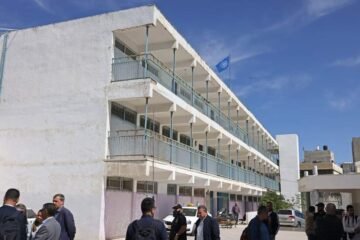
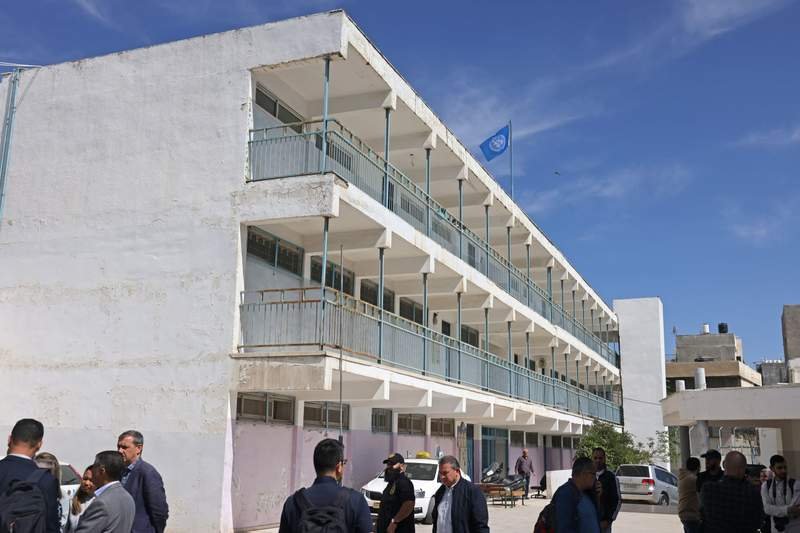
A man enters a building of the United Nations Relief and Works Agency for Palestine Refugees (UNRWA) in the Askar camp for Palestinian refugees, east of Nablus in the West Bank, on December 31, 2025. (credit: Zain JAAFAR / AFP via Getty Images)
The remains of Yonatan Samerano were kidnapped to Gaza by UNRWA social worker Faisal Ali Mussalam al-Naami during the massacre, and Ditza Heiman was held captive by an UNRWA teacher for more than 50 days. Roland Friedrich, the director of UNRWA’s West Bank field office, told the Post that the reduction in educational activities further threatens the stability of the region.
“Whenever children are not in school and are out in the streets, particularly males, that raises the risk of delinquency and radicalization,” he stressed.
UNRWA currently provides services to those with ‘refugee’ status – around a third of the West Bank’s population. There are currently 48,000 students enrolled in 90 UNRWA schools, an increase of 3,000 students from two years prior, with demand rapidly increasing in response to the declining economic situation in the Palestinian territories, Friedrich said.
Despite only offering classes to first- to ninth-grade students, Friedrich said many Palestinians saw UNRWA schools as a lifeline and the only reasonable alternative to PA schools, which run only three days a week. The impact of COVID-19 and the deteriorating security situation in the West Bank have severely disrupted students’ learning experience and outcome, he said, particularly in Ein Kerem and Jenin.
These issues threaten the health, employment opportunities, and well-being of Palestinian students, he concluded.