‘Stolen’ grain shipments spark furious clash between Ukraine and Israel
Ukraine has erupted with fury at Israel over its purchase of grain that Kyiv says has been “stolen” from its Russian-occupied territories.
Subscribe to read this story ad-free
Get unlimited access to ad-free articles and exclusive content.

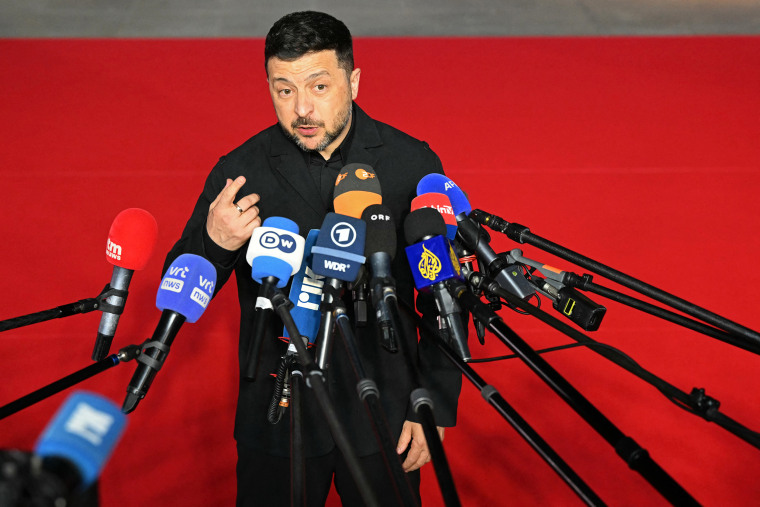
“This is not — and cannot be — legitimate business,” Ukrainian President Volodymyr Zelenskyy said Tuesday, pointing to what he said was a vessel preparing to unload the shipments at an Israeli port.
“The Israeli authorities cannot be unaware of which ships are arriving at the country’s ports and what cargo they are carrying,” he said in a post on X.
Kyiv was preparing a sanctions package in coordination with its European partners against those attempting to profit from this “criminal scheme,” Zelenskyy said.
The Ukrainian Foreign Ministry said it had summoned the Israeli ambassador and handed a note of protest.
The response from Kyiv reflects its intense efforts to stop the Kremlin funding its war effort, particularly by exploiting territory seized in its invasion. It also comes as the Iran war, which Israel is waging alongside the United States, diverts global attention and resources from Ukraine’s fight.
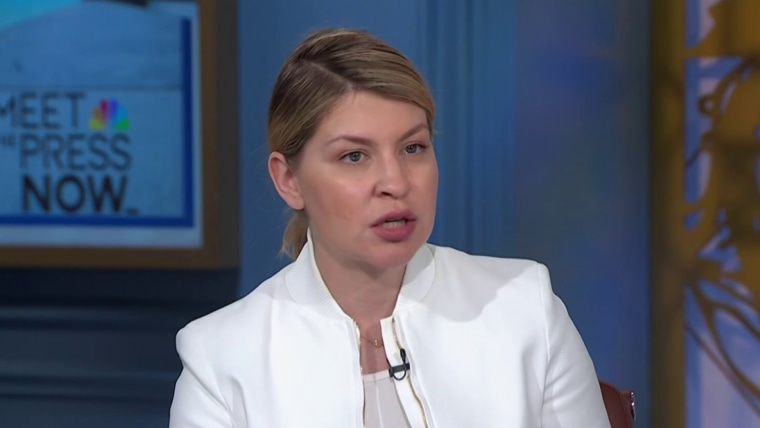
“Friendly Ukrainian-Israeli relations have the potential to benefit both countries, and Russia’s illegal trade with stolen Ukrainian grain should not undermine them,” Ukrainian Foreign Minister Andrii Sybiha wrote in a post on X on Monday.
He said it was “difficult to understand Israel’s lack of appropriate response” to previous Ukrainian complaints.
Israeli Foreign Minister Gideon Saar quickly responded on X, slamming his Ukrainian counterpart for conducting diplomacy on social media.
“Evidence substantiating the allegations have yet to be provided. You did not even submit a request for legal assistance before turning to the media and social networks,” Saar said.
Sybiha did not share evidence proving the origin of the cargo in his post.
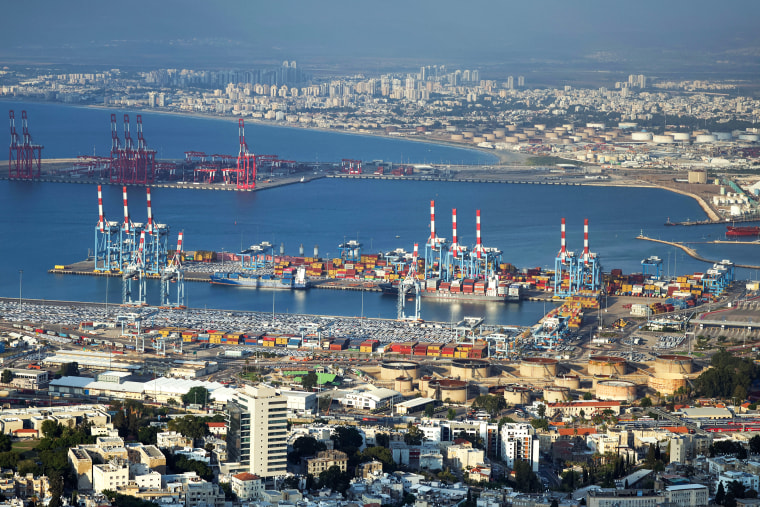
The Ukrainian Foreign Ministry said that earlier this month, a ship called ABINSK entered the Haifa port with wheat cargo from Russian-occupied territory. Kyiv said it alerted Israeli authorities but the vessel was allowed to unload its cargo and leave Haifa in mid-April.
It said the ship was part of the “shadow fleet” that helps prop up the Kremlin’s war economy by shipping products for countries facing international sanctions — such as Venezuela, Russia and Iran — often by concealing or spoofing their location data. They also often engage in ship-to-ship transfers of their cargo while at sea in an effort to obscure its origin.
Using data from ship-tracking website MarineTraffic, NBC News tracked the Russian-flagged Abinsk from the occupied Crimean port of Kerch on March 17 to Haifa on April 12.
The ship left Haifa on April 15, according to the tracker, and arrived at the port of Kavkaz in southern Russia on April 22. MarineTraffic doesn’t track the type of cargo aboard a ship or where it originates from.
Ukraine named the ship at the center of Tuesday’s firestorm as Panormitis. According to MarineTraffic data, the Panama-flagged ship left Russia’s Kavkaz port April 11 and arrived at Haifa on April 25. The ship is currently drifting in the area of Haifa Bay, per the tracker.
The Israeli Foreign Ministry sent NBC News a statement from Sa’ar, in which the minister rejected what he called “Twitter diplomacy.”
The statement said Israel was checking the facts and looking into the matter, adding that the vessel had not entered the port and was yet to submit its documents. It said that Kyiv had not submitted a request for legal assistance despite Ukraine’s statements to the contrary, and has not provided evidence for its claims.
Ukrainian Foreign Ministry spokesman Heorhii Tykhyi told a news briefing that “Ukraine has provided to the Israeli side extensive information and proof and all the data that is necessary to understand that this cargo is illegal.”
Tykhyi said that “we are not talking about two ships, two vessels. There were more than that.” He stressed that Ukraine was not targeting Israel and that Kyiv had raised similar protests when shipments had been headed for Turkey, Egypt and Algeria.
With the war dragging into the fifth year, Russia controls about 20% of Ukrainian territory. This includes some of the most fertile agrarian regions in the south of the country, which is a key supplier of grain to the world.
Kyiv has long accused Russia of plundering these regions’ resources.
Asked by NBC News about Ukraine’s allegations, Kremlin spokesman Dmitry Peskov said: “Let the Kyiv regime sort this out with Israel, and Israel with the Kyiv regime. We would prefer not to comment on this or get involved.”
Israel has been trying to maintain good relations with both Russia and Ukraine throughout the war, despite Moscow’s support for Tehran.
Ukraine recently spoke in support of the Israeli-U.S. joint strikes against Iran.
“Israel should not be in the business of cashing in on Russian war crimes,” Sen. Ruben Gallego, D-Ariz., wrote on X.
Former Rep. Adam Kinzinger, R-Ill., argued in a statement that Israel could fix the situation “with a phone call” and reject the next ship.
“It is not complicated, and it is not expensive, and the only reason not to do it is that somebody in Jerusalem has quietly decided that staying in Putin’s good graces is worth more than standing with a fellow democracy fighting for its life,” he wrote.