South American Animals That Look Almost Fake
The post South American Animals That Look Almost Fake appeared first on A-Z Animals.
South America has the most diverse wildlife of any continent, with an extremely high species count. And some of South America’s animals are surprisingly strange. The continent’s range of ecosystems, including dense rainforests, remote mountains, and thriving river systems, gave birth to a handful of animals that look quite odd. Some have unique physical features, while others evolved weird survival strategies. These creatures run the gamut from giant rodents to fish with human-like teeth! These are 10 of the strangest animals found across the continent.
Capybara

©Uwe Bergwitz/Shutterstock.com
The capybara looks like an oversized guinea pig. This truly giant rodent can weigh over 100 pounds. Despite its intimidating size, it is a highly social mammal, spending most of its life calmly lounging around water. In fact, they seem to be friendly with a multitude of other species. Birds, monkeys, turtles, and even crocodiles have been photographed casually hanging around capybaras.
Hoatzin

The hoatzin may be one of the strangest birds in the world. This Amazon native has a spiky crest and a blue face, but perhaps the weirdest aspect of the hoatzin is invisible from the outside. These birds have a digestive system similar to that of a cow. Their large digestive chamber ferments leaves, which makes an unpleasant odor, giving them the nickname “stinkbird.” Even stranger than their strong scent, young hoatzins are born with clawed wings that help them climb trees before they can fly. This species seems less like a modern bird and more like a science experiment.
Pink River Dolphin

©Kushan Nirmal 369/Shutterstock.com
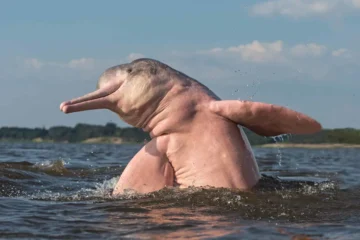
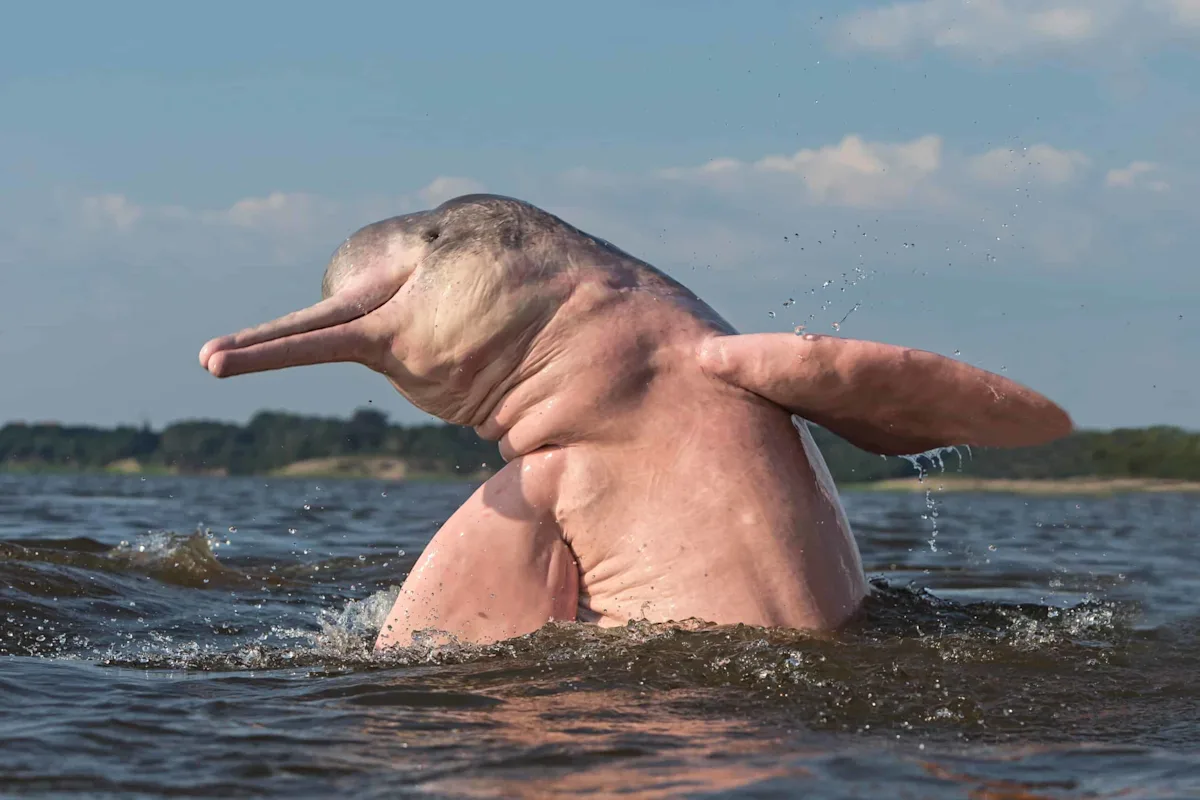
The pink river dolphin sounds like a children’s book character and almost looks fictional due to its striking hue. Unlike ocean dolphins, these freshwater mammals often develop a bright pink coloration as they mature. They also have flexible necks, which they use to navigate through submerged trees in the water. These unique dolphins have encouraged plenty of local folklore throughout the Amazon. Myths and supernatural stories continue to this day. The contrast of a pretty pink dolphin swimming through muddy jungle rivers feels unreal.
Leafcutter Ant

©Matyas Rehak/Shutterstock.com
Leafcutter ants look bizarre, but these critters are odd for more than just their appearance. These ants are capable of carrying leaves that are massive compared to their body size. It’s remarkable to see these tiny insects marching through South American rainforests toting vegetation many times larger than themselves. At first glance, it almost looks like the jungle floor is moving by itself! Despite the amount of effort to lug the leaves long distances, the ants do not actually eat the foliage. Instead, they use the leaves to grow fungus gardens underground, making them one of nature’s most unusual farmers.
Glass Frog

©iStock.com/Maria Ogrzewalska
Glass frogs are named for the see-through skin on the underside of their bodies. In some species, the skin is so translucent that you can actually see internal organs, including the heart and digestive tract. This transparency has an evolutionary purpose; it helps camouflage them against leaves in rainforests, almost making them invisible to predators from below. Meanwhile, many species are bright green on top! These tiny amphibians look somewhat otherworldly due to their organ-revealing skin.
Giant Anteater

©lifebehindthelens/Shutterstock.com
The giant anteater looks like several unrelated animals sewn together to create one very large, strange hybrid creature. Among its many unusual features are a long tube-like snout, shaggy fur, giant claws, and an excessively bushy tail. These animals lack teeth, relying exclusively on their sticky tongues to slurp up tens of thousands of ants and termites each and every day. Though they are exclusively bug eaters, they can appear quite intimidating; their front claws are so large that they have to walk on their knuckles to avoid stabbing themselves! The giant anteater might be the closest real-life animal to a cartoon character on Earth.
Mata Mata

©LEE EUI-ZUN/Shutterstock.com
The mata mata turtle may be one of the weirdest-looking reptiles ever documented. If you walked right past this animal, you might just assume it to be a wet pile of dead leaves, thanks to its flat head, textured shell, and dangling skin flaps. But this odd nature is by design, helping the turtles camouflage perfectly in their muddy river environment. Another oddity of this reptile is its feeding style. Instead of chasing prey, the turtle uses vacuum-like suction to pull fish into its mouth. Everything about the mata mata seems downright bizarre.
Pacu

©Erik Klietsch/Shutterstock.com
The pacu is a large fish, best known for its disturbing human-like teeth. Despite these formidable teeth, pacus mostly eat fruits, nuts, and plant material instead of meat. Their square teeth are designed for crushing tough foods that falls into rivers from overhanging trees. Photos of pacu mouths have been widely shared online because the sight is truly unsettling. The combination of a fish body and what appears to be a human smile is a bit haunting.
Southern Tamandua

©Martin Pelanek/Shutterstock.com
The southern tamandua is sometimes called the “lesser anteater,” because they look somewhat like smaller versions of the great anteater. Like its larger cousin, this strange mammal has a long snout and curved claws. However, it also features a partially prehensile tail that helps it climb trees to access insect nests for ants and termites. When threatened, they rear up on their hind legs and swipe with their powerful claws. Their tree climbing skills and awkward appearance make them one of the weirdest creatures south of Central America.
Venezuelan Poodle Moth

Any creature with a name like “Venezuelan poodle moth” must be truly fabulous looking. And indeed, this insect does not disappoint. Covered in thick white fur with large dark eyes, these fuzzy little guys look like they were pulled directly out of Harry Potter. They once became internet-famous because people could not believe they were real. Adding to the mystery of the striking moth is the fact that scientists still know little about it because it was only recently documented. Its adorably bizarre appearance alone makes this animal super fascinating.
The post South American Animals That Look Almost Fake appeared first on A-Z Animals.