New York’s new jails boss once served time in a cell block he now oversees
NEW YORK — Stanley Richards knows how bleak life can be at Rikers Island, New York City’s notorious jail complex. As a young man, he spent two years locked up there for robbery.
Now, he runs the place as the city’s new Department of Correction commissioner.
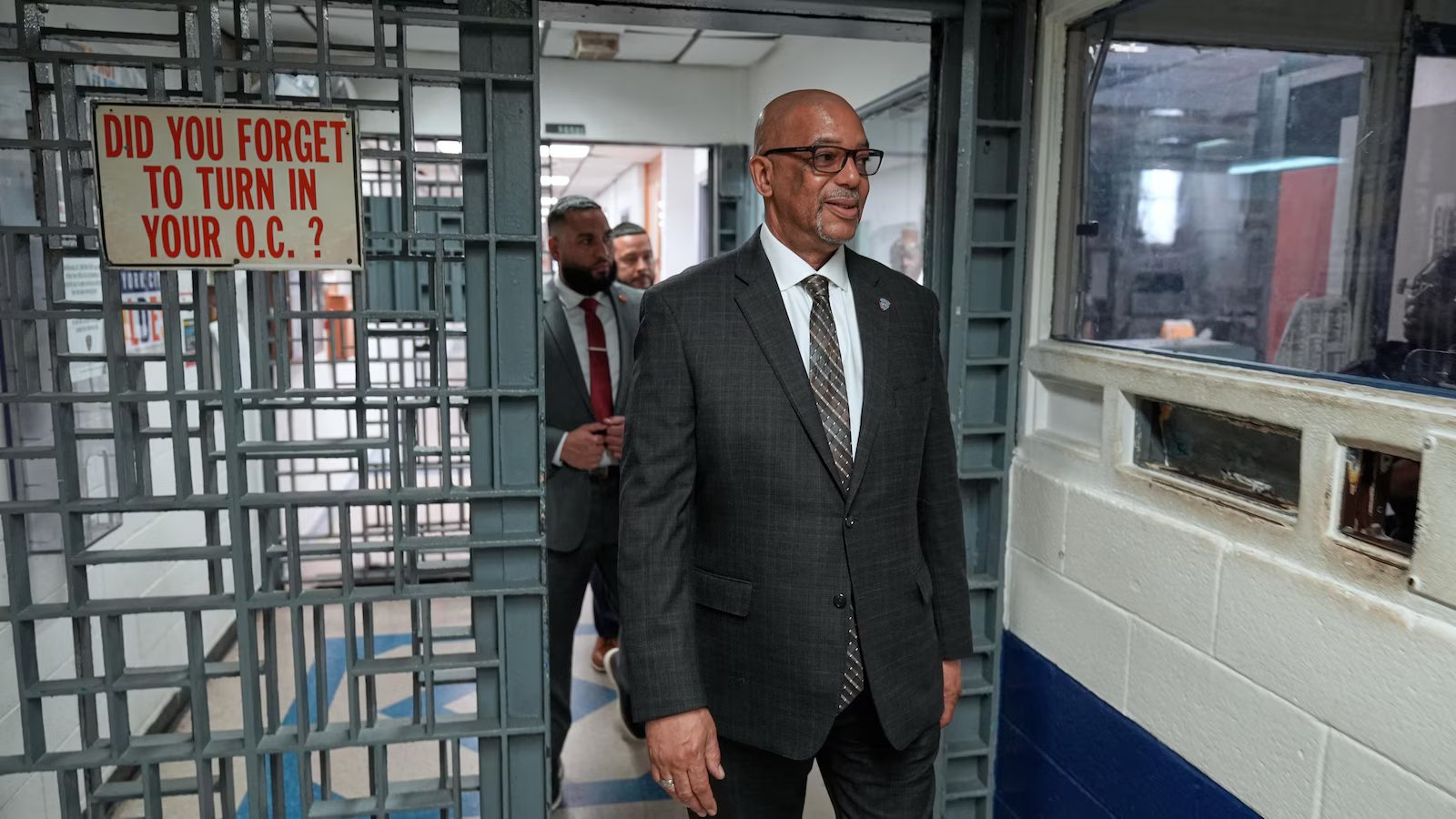
In January, Mayor Zohran Mamdani tapped Richards to become the first formerly incarcerated person to oversee the city’s jails. His office, inside a converted chapel, is across the road from his old cell block.
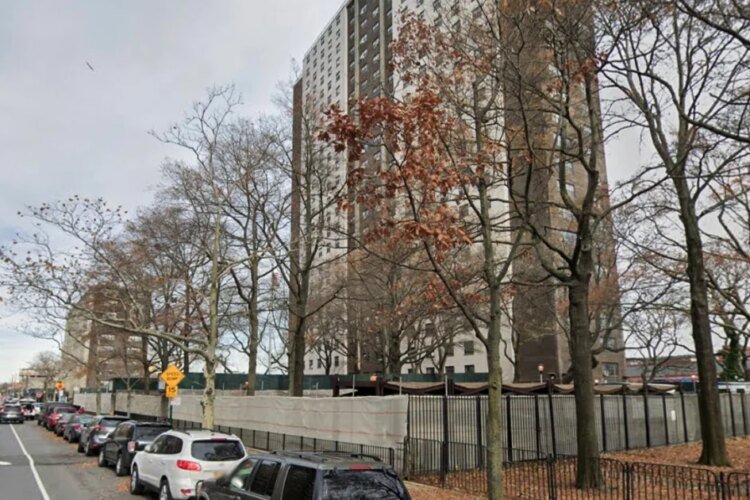
The aging dormitory where Richards was once an inmate before turning his life around was emptied of prisoners three years ago, due to deteriorating physical conditions. But on a recent visit, he stopped by his old 10-by-7-foot cell (3-by-2 meters) and reflected on how little seemed to have changed — except perhaps his perspective.
“It doesn’t give me bad feelings, you know,” Richards said as he surveyed the graffiti-scrawled concrete walls, metal bed frame and sealed window of the tiny cell. “I offended my community and committed a crime, and I paid my price for it. The truth of my story is a story of redemption.”
Richards, 65, takes over at a critical juncture for the city’s beleaguered jails system.
A federal judge in January appointed Rikers’ first “remediation manager,” a new court-ordered position with wide authority to help bring order to the unruly jail following years of problems with violence and questions about inmate health care. Last year, 15 people died in Department of Correction custody, almost all from medical problems, according to the Vera Institute of Justice, a criminal justice advocacy group.
A deadline to shutter Rikers and move inmates to four smaller jails across the city is also fast approaching. A city law passed in 2019 mandates the closure of all jail facilities on the 400-acre island, located just north of LaGuardia Airport, by 2027.
Richards, who started in February, believes his experience as an inmate, advocate and department leader has uniquely prepared him for the challenges ahead.
As he tells it, he grew up in a troubled Bronx housing project, joined a gang at a young age, and quickly turned to selling drugs and committing crimes. He cycled in and out of jails for more than a decade. His last and longest stint was for robbery in the late 1980s.
After being released from an upstate prison in 1991, Richards took a job as a counselor at the Fortune Society, a nonprofit that helps inmates reenter society. Over a three-decade career there, he rose to CEO. Richards also served in leadership roles at the city’s Department of Correction under former Mayor Bill de Blasio, a Democrat.
Ben Heller, a program manager at the Vera Institute, said Richards’ appointment sends a “hugely powerful” message.
“Commissioner Richards understands that treating people with dignity is not at odds with keeping communities safe. They should go hand in hand,” he said. “It’s clear from his own lived experience and professional expertise that he understands that we cannot incarcerate our way to safety.”
Richards has pledged to work closely with Rikers’ new federal overseer, Nicholas Deml. That’s a change, Heller said, from the administration of former Mayor Eric Adams, a former city police captain who staunchly opposed a federal takeover of Rikers.
“Our goals are not different,” agreed Richards. “We all want safe jails. We don’t want our officers attacked. We don’t want people in our care attacked.”
The administration has also taken steps toward closing Rikers. The process, though, is years behind schedule, and Mamdani has acknowledged the 2027 deadline is “practically impossible to fulfill.”
Earlier this month, the department opened a jail unit within the city’s Bellevue Hospital in Manhattan that will house more than 100 people with acute medical conditions and serious mental illness who are currently held at Rikers.
Richards said the move allows the department to shutter a Rikers building dating to the 1930s this June while ensuring inmates receive proper care.
He said the department is also working with court officials and prosecutors to ensure cases are processed efficiently so people don’t linger at Rikers awaiting trial, and that those eligible for diversion programs are safely managed in the community and not in jails.
“We do those things, we’ll see the population decrease,” Richards said.
As mayor, Adams had opposed closing Rikers, saying he would rather rehabilitate it, and dismissed plans for smaller jails as “flawed.”
Rikers houses the vast majority of the roughly 6,700 people currently locked up in the city’s jail system, according to department data. That’s up from around 3,900 in 2020, but still down from the roughly 20,000 people in custody in the early 1990s.
The federal remediation manager, Deml, who previously led Vermont’s corrections department, and a spokesperson for Adams didn’t respond to messages seeking comment.
Richards says he plans to tackle violence in the jails by filling some 1,300 staff vacancies, which have led to long hours, unsafe conditions and ballooning overtime costs. The department employs more than 7,400 people, including more than 5,700 uniformed officers.
Correctional officers’ union president Benny Boscio didn’t respond to messages from The Associated Press, but has said he hopes Richards “demonstrates a commitment to putting safety and security before any political ideology.”
Richards said he’s also working to launch new jailhouse programs to help inmates better prepare for life outside jail, and he’s committed to abiding by a city law restricting use of solitary confinement — a reform Adams had said was wrongheaded and tried to block.
“This has been a system that society has said, ‘Out of sight, out of mind.’ Has not paid attention to, has demonized, has blamed, has ostracized,” Richards said. “And for me, those days are over. For me, we are gonna walk in the light. We’re gonna lift this place up. We’re going to lift the people who work here. We’re to lift people who are sent to us for care.”
___
Follow Philip Marcelo at https://x.com/philmarcelo.