China presses Iran to restore Hormuz shipping ahead of Trump-Xi summit
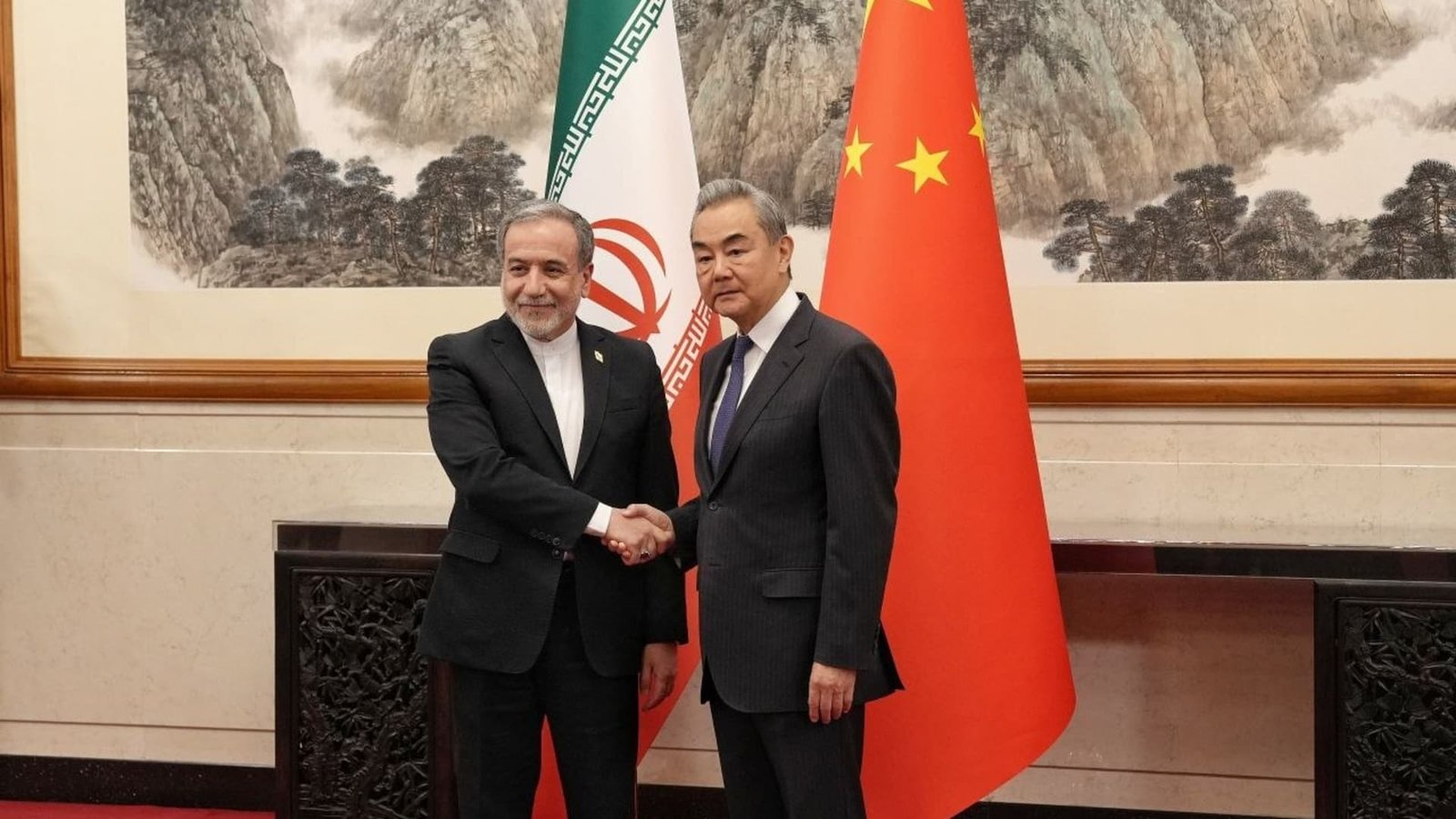
Iranian Foreign Minister Abbas Araghchi meets with Chinese Minister of Foreign Affairs Wang Yi in Beijing, China on May 6, 2026.
Iranian Foreign Ministry/Anadolu via Getty Images
China pressed Iran on Wednesday to pursue a diplomatic resolution to the Middle East conflict and refrain from resuming hostilities, as Beijing seeks to cement its position as a key mediator ahead of a high-stakes summit with the U.S.
In a meeting with his Iranian counterpart Abbas Araghchi, Chinese foreign minister Wang Yi called for “an immediate end to the hostilities” while urging warring powers to continue diplomatic negotiations.
China also called for a “prompt resumption of shipping traffic through the Strait of Hormuz,” though that point was absent in a statement posted by Iran’s foreign ministry on Telegram.
The meeting marked the first such visit by Araghchi since the outbreak of the U.S.-Israel war on Tehran on Feb. 28, and came just days before U.S. President Donald Trump‘s scheduled visit to Beijing.
Chinese state media proactively publicized the visit late Tuesday, citing a foreign ministry statement that noted Beijing initiated the invitation.
“This meeting is deeply strategic,” said Amir Handjani, a board member at the Quincy Institute for Responsible Statecraft. “Tehran and Beijing are aligning their interests before Trump’s summit with [Chinese President Xi Jinping], and the timing is deliberate.”
That said, China wants stability in the Persian Gulf to protect trade and energy flows, Handjani noted.
“Chinese leadership wants tankers moving and trade flowing out of the Persian Gulf into Asian markets, he said. “They have no appetite for the inflationary shock and potential recession that a prolonged blockade would trigger across the region.”
Wang and Araghchi have held at least three phone calls since the outbreak of the Iran war. Beijing has repeatedly called for an immediate ceasefire and for commercial shipping to move freely through the Strait of Hormuz. In late April, Chinese President Xi Jinping urged “normal passage” through the crucial waterway.
Before the war, about 20% of the world’s oil and liquefied natural gas passed through the strait. But commercial traffic has slowed sharply in recent weeks.
China, the world’s largest buyer of Gulf oil and gas, has absorbed the Hormuz shock, though domestic stockpiles and a diversified energy mix have provided some buffer.

In the run-up to Trump’s widely anticipated May 14-15 visit to China, the U.S. president’s advisors have urged Beijing to pressure Iran to restore commercial shipping.
A director at a Beijing-affiliated think tank previously told CNBC that China lacked both the capability and inclination to pressure either side into negotiations, despite facilitating a temporary ceasefire last month.
For Tehran, the China visit is a way to show the U.S. that “it isn’t isolated and has friends and options,” said Danny Russel, a distinguished fellow at the Asia Society Policy Institute, as Iranian leadership seeks to bolster its bargaining position in the standoff with Washington and deter renewed American attacks.
Tehran is expected to seek assurances from Beijing on oil flows, financial channels, and diplomatic backing against renewed U.S. military action, Russel added.
In return, he expects Beijing to push Iran to stop threatening Gulf infrastructure and commercial shipping and to move toward reopening the Strait of Hormuz.
For Xi, the visit could present an opportunity to position Beijing as a responsible power before Trump’s visit, while limiting China’s own risks, said Russel.
The visit also comes as both sides have been trading blows ahead of the summit. In an unprecedented act of defiance, China pushed back against Washington’s sanctions on Chinese refiners buying Iranian crude, invoking a “blocking rule” for the first time, directing companies not to comply with U.S. sanctions.
The countervailing orders would, at a high level, “place U.S. companies in the position of choosing between compliance with U.S. or Chinese regulatory regimes,” said Han Shen Lin, China managing director for The Asia Group.
Trump’s upcoming Beijing summit — delayed by more than a month due to the war in Iran — could present a critical opportunity for the U.S. president to dial back friction and secure commitments from China to purchase American farm produce, industrial goods, and energy ahead of the November midterm elections.
A confrontation over Iran risks derailing that plan, analysts warn.
“Even if Trump believes the Chinese are just providing diplomatic cover while keeping Iran economically afloat, he is at a disadvantage,” Russel said. “He needs Beijing to restrain Tehran, not empower it.”