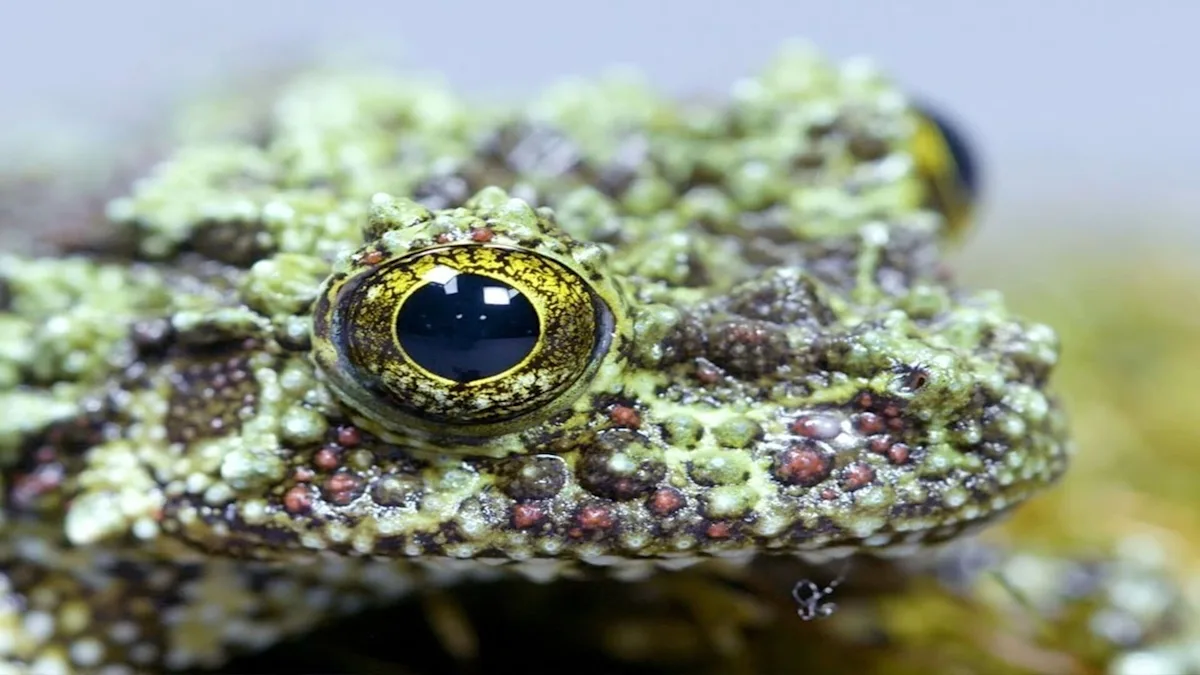
Mossy frog, the master of camouflage in Vietnam forests
Deep within the dense forests of Vietnam lives one of nature’s most perfectly disguised amphibians, the mossy frog. Known scientifically as Theloderma corticale, this small creature has evolved an extraordinary camouflage that allows it to blend seamlessly into its surroundings. Its skin, covered in irregular green and brown patterns, closely resembles moss covered rocks and tree bark, making it nearly invisible to predators. When danger approaches, the frog enhances this illusion by curling its body and remaining completely still, effectively playing dead to avoid detection. This behaviour, combined with its natural colouring, makes it one of the most effective masters of disguise in the animal kingdom. Found primarily in flooded caves and moist forest environments, the mossy frog thrives in areas where water and vegetation are abundant. Its semi aquatic lifestyle is supported by specialised toe pads that act like suction cups, allowing it to climb slippery surfaces and navigate both land and water with ease. As an opportunistic feeder, it consumes insects and other small organisms available in its ever changing habitat, adapting its diet based on what is accessible at any given time.
Despite its remarkable adaptations, the mossy frog faces increasing threats that put its survival at risk. Rapid deforestation across northern Vietnam has significantly reduced the size and quality of its natural habitat, forcing populations into smaller and more fragmented areas. As forests are cleared for development and agriculture, the delicate ecosystem that supports this species begins to collapse, leaving the frog vulnerable to predators and environmental changes. Habitat loss not only affects their ability to find food and shelter but also disrupts breeding cycles that depend on specific conditions found in forest caves and streams. As a result, the mossy frog has been placed on endangered species lists, highlighting the urgent need for conservation efforts. Protecting forest habitats and promoting sustainable land use are critical steps in ensuring the survival of this unique amphibian. The mossy frog serves as a powerful reminder of how closely species are tied to their environments and how human activity can have lasting impacts on even the most well adapted creatures in nature.