Middle East leaders meet in Pakistan; Trump weighs Iran ground troops
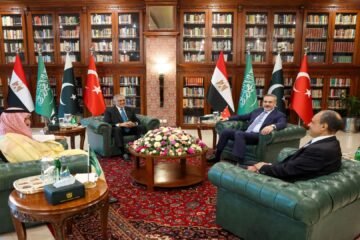
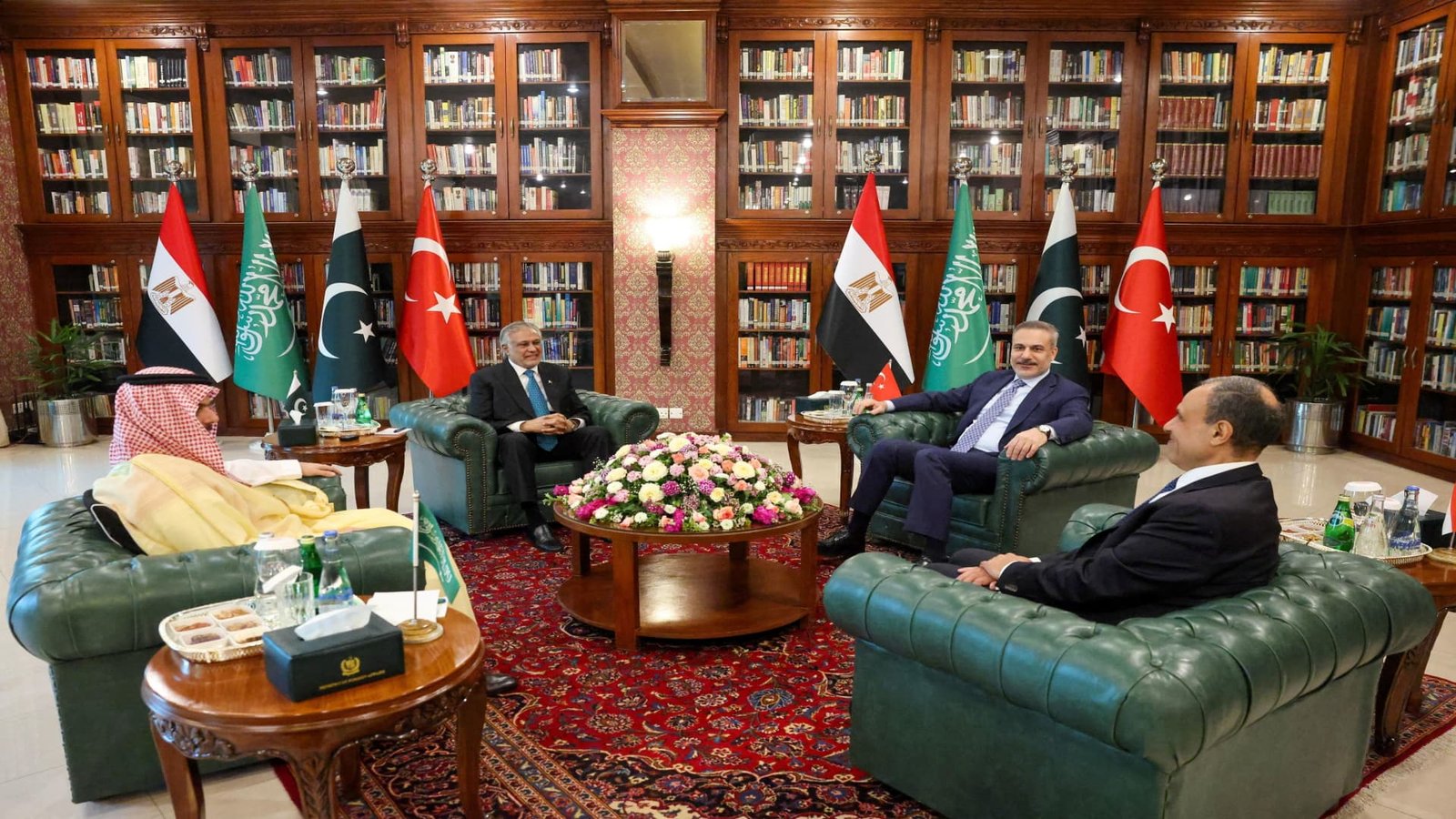
Foreign Ministers Badr Abdelatty of Egypt, Prince Faisal bin Farhan Al Saud of Saudi Arabia, Ishaq Dar of Pakistan and Hakan Fidan of Turkey meet to discuss regional de-escalation, amid the U.S.-Israel conflict with Iran, in Islamabad, Pakistan, on March 29, 2026.
Turkish Foreign Ministry | Via Reuters
Pakistani Deputy Prime Minister and Foreign Minister Ishaq Dar said Sunday that both the U.S. and Iran have expressed confidence in Pakistan to hold talks in the coming days aimed at ending the U.S.-Israeli war in Iran.
In a statement following a meeting with the foreign ministers of Saudi Arabia, Turkey and Egypt, Dar said Pakistan is engaging with the U.S. to find an end to the conflict, and that “both Iran and the US have expressed their confidence in Pakistan to facilitate the talks.
“Pakistan will be honoured to host and facilitate meaningful talks between the two sides in coming days, for a comprehensive and lasting settlement of the ongoing conflict,” Dar said.
It is unclear whether the U.S. and Iran had agreed to any formal talks with Pakistan. The White House did not immediately respond to a request for comment from CNBC.
The foreign ministers from the four Middle East nations met in Pakistan to discuss the U.S. and Israeli war on Iran, as U.S. President Donald Trump reportedly weighs deploying ground troops into the conflict that is now stretching into its second month.

Trump, meanwhile, is reportedly weighing the deployment of U.S. ground troops into the conflict as Iran holds the Strait of Hormuz largely closed — sending shockwaves through the markets and spiking oil and gasoline prices.
The Washington Post reported Saturday night that the Pentagon is preparing for weeks of potential ground conflict in Iran as thousands of U.S. troops arrive in the region. It’s unclear if Trump will green-light the operations, as he claims that the war effort is both winding down while threatening to escalate the conflict.
Lawmakers, who just left Washington for a two-week recess, on Sunday expressed some hesitation about a potential full-scale invasion of Iran with U.S. forces. But top Republicans appeared to give Trump partial approval for some use of U.S. ground troops.
Sen. James Lankford, R-Okla., said on NBC’s “Meet the Press” that his support for the use of ground troops “depends on what boots we’re putting on the ground,” arguing that the use of special forces units for specific goals is different than a longstanding occupation and ground war, which he said would require congressional authorization.
“If we had a long-standing war that’s happening, go back again to what happened in Iraq or in Afghanistan, yes,” Lankford said on congressional approval. “If this is to protect Americans and to be able to make sure that we’re in there for a season and we’re stopping and getting out, that’s very, very different. So again, this is all contingent.”
Iranian parliament speaker Mohammad Bagher Qalibaf on Sunday warned that Iranian troops “are waiting for the arrival of American troops on the ground to set them on fire and punish their regional partners forever,” the Associated Press reported, citing state media.
Egypt says meetings aim for ‘direct dialogue’
Egyptian Foreign Minister Badr Abdelatty said the meetings in Pakistan are aimed at opening a “direct dialogue” between the U.S. and Iran, which have largely communicated through mediators. The war began with U.S. and Israeli strikes during indirect talks. Pakistan said the foreign ministers met Sunday without U.S. or Israeli participation.
Foreign Ministers Badr Abdelatty of Egypt, Prince Faisal bin Farhan Al Saud of Saudi Arabia, Ishaq Dar of Pakistan and Hakan Fidan of Turkey meet to discuss regional de-escalation, amid the U.S.-Israel conflict with Iran, in Islamabad, Pakistan, on March 29, 2026.
Turkish Foreign Ministry | Via Reuters
Iranian officials have rejected a U.S. 15-point “action list” as a framework for a possible peace deal and publicly dismissed the idea of negotiating under pressure. But Iran’s state broadcaster has reported that Tehran drafted its own five-point proposal, reportedly calling for a halt to killing Iranian officials, guarantees against future attacks, reparations, and Iran’s “exercise of sovereignty over the Strait of Hormuz.”
Iran has eased some restrictions on commercial ships in the strait, agreeing late Saturday to allow 20 more Pakistani-flagged vessels to pass through. It “sends a clear signal that Iran remains open for business with the world, provided the United States abandons coercion,” said Asif Durrani, Pakistan’s former ambassador to Iran.
An adviser to the United Arab Emirates, Anwar Gargash, called for any settlement to the war to include “clear guarantees” that Iranian attacks on neighbors will not be repeated. He said Iran’s government has become “the main threat” to Persian Gulf security, and called for compensation for attacks on civilian infrastructure.
Iran heavy water production plant damaged
The U.N. nuclear watchdog said satellite imagery confirmed severe damage to the Khondab heavy-water production plant near Arak.
The International Atomic Energy Agency added that the installation has no declared nuclear material. Iran’s Atomic Energy Organization reported on Friday that the facility was hit and Israel claimed responsibility for the strike.
Since the war began a month ago, several strikes have targeted nuclear sites across Iran.
Aluminium maker struck
Aluminium Bahrain, which hosts the world’s largest smelter of the metal, said on Sunday its facility was subjected to an Iranian attack.
The company, known as Alba, said in a statement that the attack happened on Saturday.
“Alba is assessing the extent of the damage to its facilities and remains focused on maintaining its operational resilience and the safety of its employees,” Alba said.
The company had cut production capacity by 19% of its annual output of 1.6 million tons “as an operational measure to preserve business continuity amid ongoing supply and transit disruptions affecting the Strait of Hormuz,” the company said on March 15.
The production cuts have been adding to fears of a global shortage of the metal. Aluminum prices surged to four-year highs earlier this month before paring some of those gains. They remain 4.3% above their Feb. 27 levels.
While aluminum may be the most abundant metal on earth, it is crucial to the functioning of the world economy. It is an essential material across electronics, transport, and construction, as well as other industries such as solar panels and packaging.

LME Aluminum
Iran has been retaliating against U.S. and Israeli attacks that began on Feb. 28 by firing missiles and drones at its regional neighbors.
The United Arab Emirates said on Sunday its air defenses were dealing with the latest salvo of incoming missiles.
Houthis enter the fray
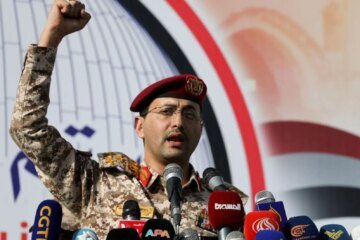
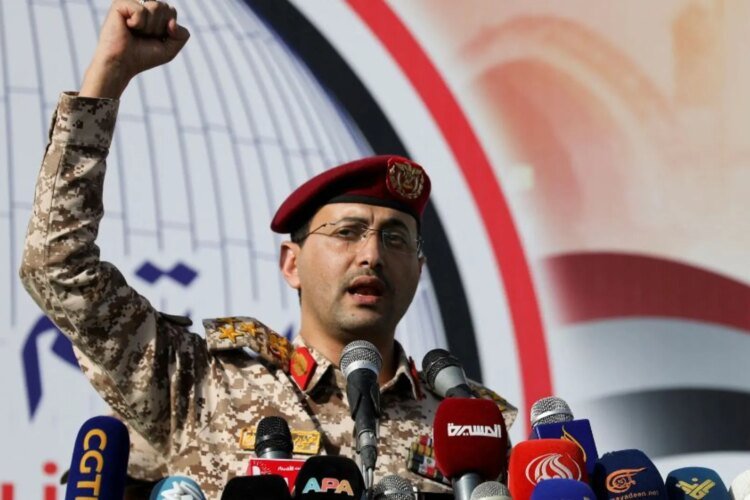
On Saturday, Iranian-backed Houthi fighters said they launched a missile strike against Israel, the first time the group has participated in the war.
Analysts have told CNBC that the Houthis could attempt to choke off maritime traffic through the Bab el-Mandeb Strait, separating the Arabian Peninsula and the Horn of Africa — through which ships must pass to reach the Red Sea and the Suez Canal — adding to pressure on global trade.
On Saturday, Danish shipping giant Maersk, widely regarded as a barometer of global trade, responded to reports of drone activity and explosions that occurred at the Port of Salalah in Oman.
The Bab el-Mandeb Strait was estimated to account for 12% of seaborne oil trade and 8% of liquefied natural gas trade in the first half of 2023.
Iranian forces have already effectively shut down the Strait of Hormuz between Iran and the Arabian Peninsula, through which about 20% of the world’s oil supplies moved before the war.
Oil prices on Friday closed at their highest level in more than three years, as President Donald Trump’s pivot toward negotiations with Iran failed to ease market fears about the huge supply disruption in the Middle East.
U.S. crude oil prices rose 5.46% to close at $99.64 per barrel. International benchmark Brent crude prices gained 4.22% to settle at $112.57.
Trump’s move to give Iran a 10-day extension to open the strategically vital Strait failed to soothe supply concerns. The president said in a social media post on Thursday that talks with Iran were “going very well” despite “erroneous statements to the contrary by the Fake News Media, and others.” Iran says it has not engaged in any negotiations.
As part of the announcement, the U.S. president said he would pause attacks on Iran’s energy infrastructure through April 6.
Meanwhile, a growing U.S. troop presence in the Gulf has raised fears of a ground invasion, possibly prolonging the war and uncertainty for the global economy.
The U.S. Central Command confirmed the 31st Marine Expeditionary Unit, made up of roughly 3,500 Sailors and Marines, arrived in the Middle East on Saturday.
“U.S. Sailors and Marines aboard USS Tripoli (LHA 7) arrived in the U.S. Central Command area of responsibility, March 27,” according to a statement posted on X.
On Sunday, Iran threatened to target U.S. and Israeli educational institutions in the region unless the U.S. condemns attacks on Iranian universities, according to Iranian media, which quoted its armed forces. It posted images of damage to the University of Science and Technology in Tehran, which it blamed on U.S. attacks.
Death toll continues to climb
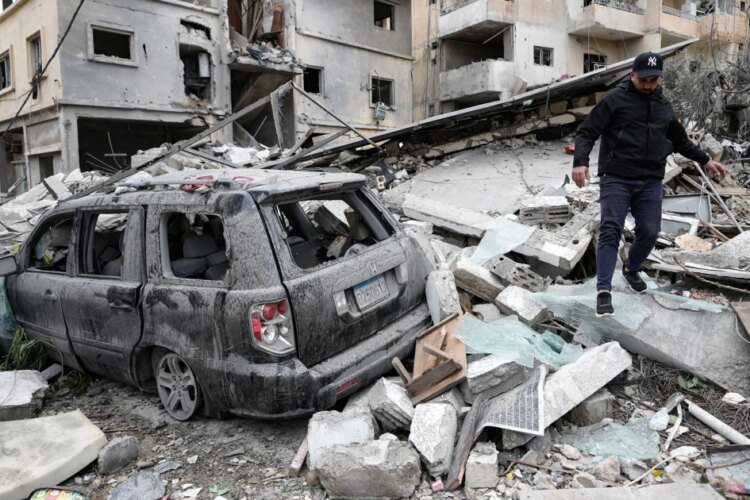
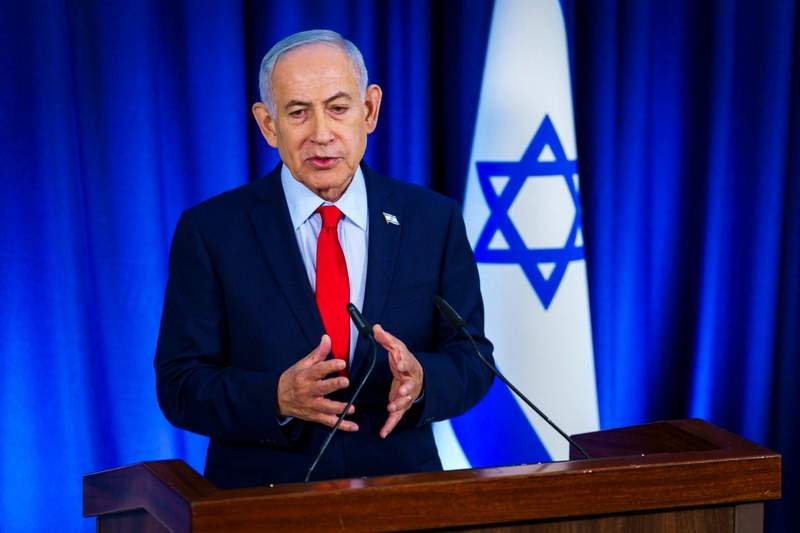
In Lebanon, officials said more than 1,200 people have been killed. There were fears of more deaths after Netanyahu, speaking on a visit to northern Israel, said Israel was “determined to fundamentally change the situation in the north.” He said Hezbollah “still has residual capability to fire rockets at us.”
Iranian authorities say more than 1,900 people have been killed in the Islamic Republic, while 19 have been reported dead in Israel.
In Iraq, where Iranian-supported militia groups have entered the conflict, 80 members of the security forces have died.
In Gulf states, 20 people have been killed. Four have been killed in the occupied West Bank.
Thirteen American service members have been killed in the war.
— The Associated Press and Reuters contributed to this report