Jensen Huang doesn’t need a new chip. He needs a new moat.
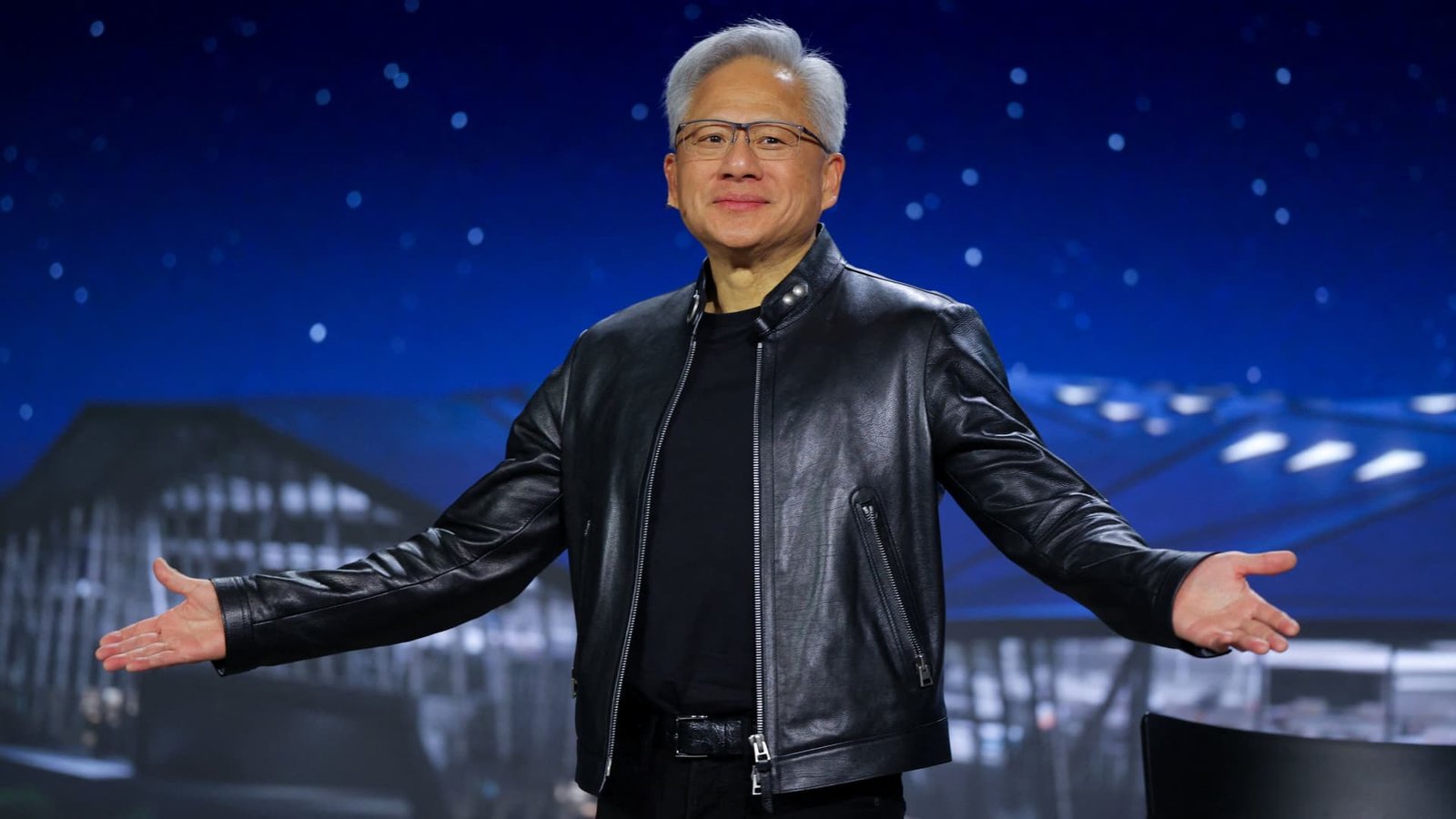
NVIDIA CEO Jensen Huang gestures during the NVIDIA GTC global AI conference in San Jose, California, U.S. March 17, 2026.
Carlos Barria | Reuters
Nvidia dominated the first era of AI — CEO Jensen Huang is making sure it owns the next one. He’s turning Nvidia from a chipmaker that’s helping to drive a market cycle into the operating system for the future of artificial intelligence.
The shift has mostly gone unnoticed and hasn’t yet been priced in by investors. But the clearest signal to date came this week.
At Nvidia’s annual developer conference, GTC, Huang launched NemoClaw, an open-source, chip-agnostic platform for building and deploying AI agents – autonomous software programs at the center of the latest advancements in the industry.
“Every company in the world should have an agentic system strategy,” Huang said. “This is the new computer now.”
New chip announcements got most of the attention at GTC, but the NemoClaw launch is the more important strategic shift and shows what Nvidia is actually becoming.
Why the chipmaker model isn’t enough
Nvidia won the AI training era by locking in users. Its chips and software ecosystem became so deeply embedded in how AI models are built that switching to a competitor was nearly impossible.
But the industry is shifting from building and training models to running them, and the inference workload doesn’t require the same lock-in. Google, Amazon and Broadcom are all building their own inference-tailored chips. The moat that made Nvidia the most valuable company in the world is thinning.
Selling chips, even the best chips, eventually means selling into a cycle. Owning the platform where those chips run is a more durable business. It’s stickier, higher-margin, and harder to displace. That’s where Huang is going on the offense with NemoClaw.
The platform play
NemoClaw is built on OpenClaw, an open-source agent created by a solo developer that went viral earlier this year, becoming the fastest-growing open-source project in history. Open source means that anyone can download, modify and run the software locally on their own servers. That’s what makes it powerful, but also risky, because there’s no company controlling what the agent can access on your machine.
Enterprises banned OpenClaw as security risks mounted. Nvidia’s version adds guardrails – security tools, privacy routing, data controls.
“Open” sounds generous, but for Nvidia it’s strategic. Nvidia gives away the layer that drives adoption and monetizes what sits beneath it — the chips and computing power that every AI agent needs to actually run. Microsoft didn’t charge for Internet Explorer and Google didn’t charge for Android, but they unlocked adoption where they could monetize it: Windows and search.
Huang is following that playbook — he isn’t charging for NemoClaw. The product is the platform. Mark Zuckerberg spent years and tens of billions of dollars on the metaverse, trying to escape his dependence on platforms owned by Apple and Google. Huang is making sure Nvidia never ends up in that position.
Commoditizing its own customers
The most aggressive part of Huang’s strategy is that it’s a direct threat to some of his top customers. The Nvidia of today relies on a handful of companies building the most powerful AI models: OpenAI, Anthropic, Google, and Meta. If any one of them gets dominant enough, it gains the leverage to squeeze Nvidia on pricing.
NemoClaw, named after Nvidia’s existing NeMo AI framework, prevents that. One AI CEO, who asked not to be named to speak candidly on the issue, called it a classic “commoditize the complement” strategy. If enterprises can deploy AI agents for free through NemoClaw, it gets a lot harder for OpenAI and Anthropic to charge premium prices for their own versions. Open source keeps the model layer fragmented with hundreds of companies building and running their own models, none big enough to dictate terms. Nvidia gets to stay in the middle and GPU demand skyrockets.
Filling the vacuum
Nvidia is also stepping into a gap no one else, at least in America, is filling. Meta pioneered open-source AI with its Llama models, but its next frontier model could reportedly be closed. Google and OpenAI keep their best models proprietary, and Anthropic has never released open weights. The open-source bench in America is thinner than it’s been since the AI boom started.
Chinese labs, meanwhile, are only accelerating open-source efforts. DeepSeek proved frontier models could be built for a fraction of the amount spent by American labs. Alibaba, ByteDance, and others followed.
Data from OpenRouter, which tracks real-world model usage, shows four of the five most popular models on its platform this month are open source, and most are Chinese. OpenRouter’s rankings are limited to its own customer base, and developers with enterprise deals typically use the model companies’ API tools.
The track record
Can a chipmaker actually become an operating system?
History would suggest otherwise. Past attempts by Intel and IBM went nowhere. But Huang has pulled off platform transitions before, pivoting Nvidia from gaming to crypto to cloud to AI training. Nvidia just posted 73% revenue growth last quarter. Its latest guidance of nearly $80 billion for the fiscal first quarter crushed estimates.
Networking alone is now a multibillion-dollar business for Nvidia, and it barely existed three years ago. No CEO in the semiconductor industry has a better record of seeing the shift early, and preemptively repositioning to take advantage of it.
What to watch
NemoClaw needs enterprise adoption to matter. Nvidia’s open-source models are free but so far unproven compared to what Chinese labs are shipping. And the vacuum Huang is stepping into could close fast if Meta reverses course or Google opens up its models.
Representatives from Meta and Google didn’t immediately respond to requests for comment.
The question investors should be asking isn’t whether NemoClaw works tomorrow. It’s whether Nvidia is still a chipmaker or an operating system. One sells into cycles, the other compounds. The market is pricing in the former but if Huang pulls this off, it should be pricing in the latter.