As The Iran War Intensifies, Threats To Oil, Water And Infrastructure Multiply
The scale and ferocity of the US and Israeli bombing campaign has continued unabated for two weeks, destroying large parts of Iran’s military infrastructure and eliminating many of the regime’s key leaders. For its part, Iran has responded by launching its own aggressive offensive operations, using its ballistic missiles and drones to attack US and Israeli military facilities as well as basic civilian infrastructure targets throughout the Middle East.
At this point, I think it’s possible to highlight several developments that I’m watching carefully and that I believe, based on my experience in government working on global conflicts, will be key to shaping the war’s near-term trajectory.
The Iran War Is Getting Bigger, And Deadlier
In looking at the battlefield dynamic, I am struck by the frequency of air, missile, and drone attacks, the targets hit, and the scale of the damage caused. Just consider, after only two weeks, the US and Israel claim to have already hit more than 5,000 Iranian targets, with General Cain, the US Chairman of the Joint Chiefs, noting that the objective is to strike “deeper into Iran’s military and industrial base.” Israel, meanwhile, is focusing its strikes on Iranian military and intelligence targets but also parts of the country’s oil infrastructure as well as Hezbollah targets in southern Lebanon and Beirut.
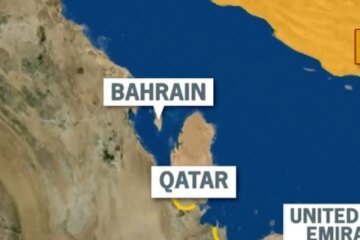
Not to be outdone, Iran has launched hundreds of ballistic missiles and deadly Shahed drones at US military facilities throughout the region, at Tel Aviv and other locations inside Israel, and at its Gulf neighbors, most notably UAE, Saudi Arabia, Kuwait, Bahrain, and Qatar. The fighting has resulted in more than 1,200 killed from the fighting in Iran, 13 US military personnel killed with another 140 or so wounded, and civilian deaths in Israel, Lebanon, and in the Gulf states. Sadly, this toll is almost certain to increase as offensive operations continue as the war enters its third week.
Oil Markets Are On Edge
Apart from the war’s obvious human toll, the combination of attacks on oil infrastructure, coupled with Iran’s threats to close the Strait of Hormuz (through which 20-25% of the global seaborne oil trade flows) for the foreseeable future, is causing oil prices to fluctuate wildly, with Brent prices routinely whipsawing between $85 and $120. Iran is also attacking vessels located near the Strait, and there are reports that Iran is planning to lay sea mines at various points in this narrow waterway to further disrupt traffic.
Not surprisingly, leading economists worry that a prolonged disruption in the world’s oil market lasting a few months or more could spur higher global inflation, damage business investment and trade, slow economic activity in industries including car manufacturing and agriculture, and eventually trigger a broad recession.
US and potentially allied forces are likely to try soon to force open the Strait of Hormuz, which Tehran closed on the first day of the conflict, though efforts to do this will be a challenging endeavor under Iranian fire. There are estimates that prior to the outbreak of hostilities Iran possessed as many as 5,000 sea mines, including static mines that remain at various depths and more sophisticated ones (many of Chinese and Russian origin) that rest on the seabed and are launched to the surface by various triggers, including acoustic noise, pressure changes from a passing ship and magnetic signatures.
So far, Iranian officials have officially denied mining the Strait and the US has destroyed—as part of its broad air campaign—many of Iran’s larger ships capable of deploying significant numbers of mines. However, I anticipate that Iran’s Revolutionary Guard Forces will attempt to deploy mines, even if in smaller numbers, in the coming days given the physical and psychological threat they pose to commercial shipping.
One other point: despite the intense fighting and a sharp reduction in most oil exports from the region, Iran has surprisingly managed to keep its oil exports at a relatively normal pace of between 1.1 and 1.5 million barrels per day since the beginning of the conflict. That might help explain at least some of the reason for Tehran’s resilience and offer a potential point of leverage for the US in future negotiations or military operations (as evidenced by today’s strike on military-only targets on Kharg Island, Iran’s vital oil hub).
Critical Infrastructure Is Under Siege
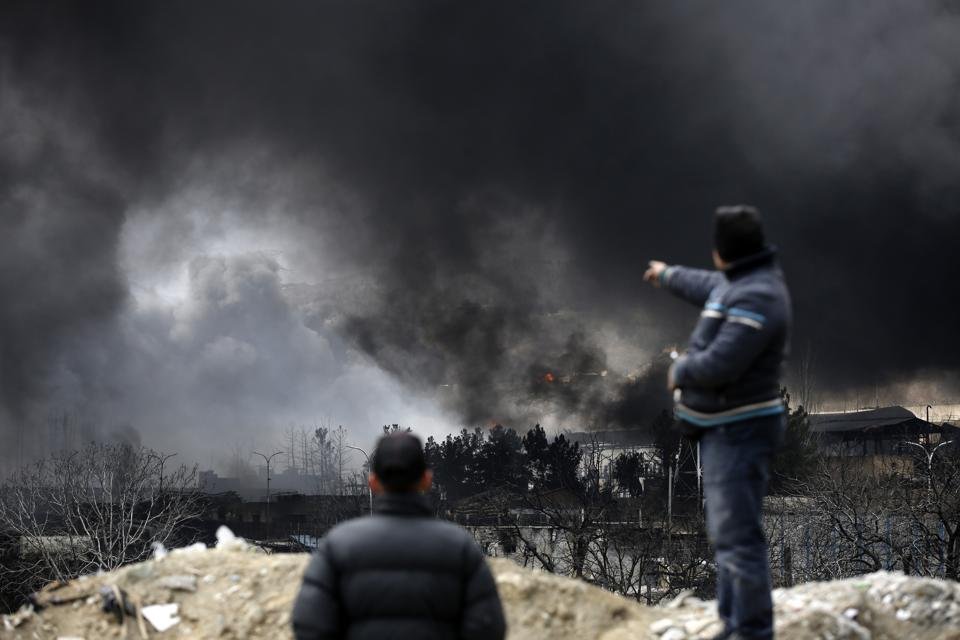
There appears to be a move away from striking mainly military targets and defense-related infrastructure, especially by Iran, to a more expansive set of targets including hotels, airports, oil production facilities and desalination plants.
Targeting desalination plants is especially worrisome given the region’s utter dependence on drinking water from these plants. Just consider, recent UN data shows that nearly 70% of Saudi Arabia’s drinking water comes from desalination plants. Oman’s is at 86%, Kuwait’s is at 90% and Israel relies on its large coastal desalination plants for nearly half of its potable water.
In my view it is conceivable that if this war intensifies it could devolve and targeting each other’s critical civilian infrastructure becomes commonplace, a truly worrisome development for the region’s post-conflict recovery.
Air Power Has Its Limits
A final trend that is increasingly evident is the inability of US and Israeli airpower to meet many of the campaign’s previously stated objectives. For example, despite having quickly suppressed Iran’s air defense systems and established air dominance, this airpower advantage has not been effective in forcing regime change, inspiring the population to engage in another round of widespread anti-government protests, destroying Iran’s remaining stockpile of enriched uranium, or, at least for now, ensuring the unimpeded flow of oil through the Strait of Hormuz.
There is little doubt that the combined US and Israeli air strikes have severely degraded Iran’s traditional military capabilities, damaged missile and drone manufacturing facilities and stockpiles, interrupted regime communications, and heightened the personal risk to the country’s leaders. But so far this conflict has highlighted the reality that while air power is a critical component of modern warfare it is more powerful when integrated with other elements of national military strength, particularly ground troops.
No Immediate End In Sight
Given this backdrop, I’d expect to see intense fighting for at least the next few weeks as both sides try to gain a decisive advantage. In my view, the next looming flashpoint is likely to be the US effort to force open the Strait of Hormuz if Iran continues to selectively limit shipping, and I expect that to be a complex operation, especially if Iran decides to deploy mines and launch attacks on US (and potentially European) ships involved in the clearing operation.
Other issues I’m watching in the next few weeks:
-
Potential responses by Iran’s proxies, especially Hezbollah and the Houthis;
-
Russia’s reported support for Iran and how it might manifest on the battlefield;
-
The role that European countries will play in safeguarding international oil shipping;
-
The apparent race between Iran’s dwindling inventory of ballistic missiles and (to a lesser extent) drones, and the US and Israel’s ability to produce enough air defense interceptors;
-
The expansion of Israel’s military campaign in Lebanon;
-
And any indication that China or Russia are offering to play a role in mediating an end to this crisis.
I’ll circle back as soon as events warrant.