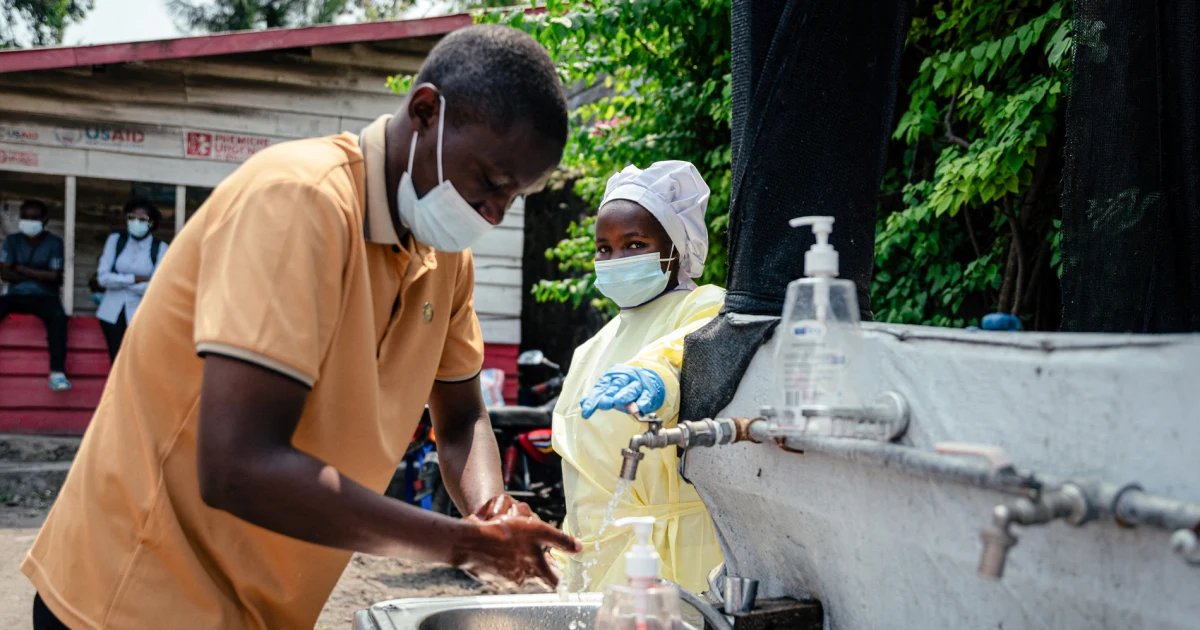
Ebola deaths rise sharply as outbreak’s ‘scale and speed’ worry WHO chief
The death toll from an Ebola outbreak in central Africa rose sharply Tuesday, with the head of the World Health Organization expressing concern over the “scale and speed of the epidemic.”
Subscribe to read this story ad-free
Get unlimited access to ad-free articles and exclusive content.

At least 131 people are believed to have died and 531 suspected to have been infected, according to the Congolese Health Ministry. An American missionary was among those who tested positive for the deadly disease.
Global health experts are worried about the capacity of this outbreak to cause widespread illness and death in central Africa — not least because this rare strain of Ebola, the Bundibugyo virus, has no approved vaccine or treatment and a shortage of available tests.
The outbreak was also undetected for weeks, adding to the complexities in containing it. It has ripped through a region riven by civil war and conflict, while health officials said funding shortages were further hampering their ability to fight Ebola.
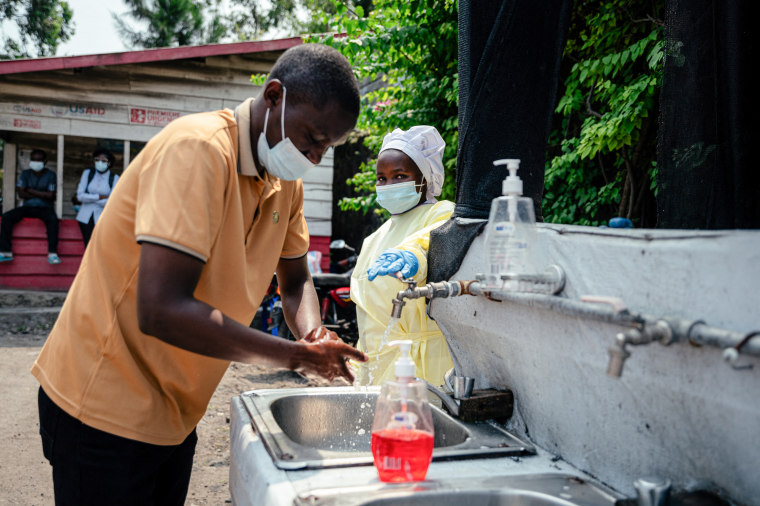
WHO Director-General Tedros Adhanom Ghebreyesus said early Tuesday that he was “deeply concerned about the scale and speed of the epidemic.”
The State Department said that it was “strongly” urging Americans not to travel to Congo, South Sudan or Uganda “for any reason.”
Most cases have been in towns at the heart of the region’s gold-mining industry, which necessitates cross-border travel. But they have also been reported as far away as the rebel-held city of Goma, some 230 miles from the outbreak’s epicenter in the eastern Ituri province, as well as in neighboring Uganda.
The number of suspected cases has risen dramatically from the 300 believed infected and 88 killed as of Monday.
There have been only a couple of previous Bundibugyo outbreaks — one in Uganda in 2007 and one in Congo in 2012. The fatality rate during those incidents ranged from 30% to 50%, according to WHO.
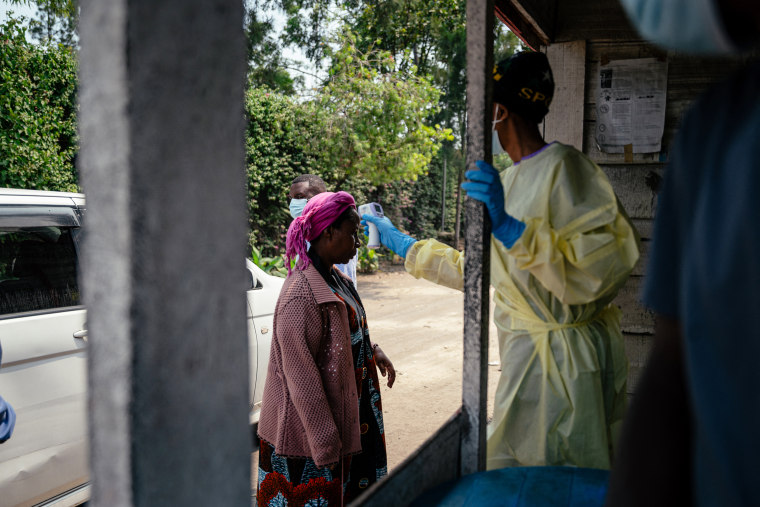
WHO’s emergency committee is set to convene later Tuesday to discuss the outbreak.
The United Nations’ health agency said six tons of supplies were set to arrive in Congo on Tuesday, including personal protective equipment and other medical supplies.
President Donald Trump said that he too was “concerned” about the situation, noting that the outbreak was so far confined to central Africa. Health experts say the likelihood of Ebola spreading in wealthy countries is very low because it spreads through bodily fluids rather than in the air.
On Tuesday, the U.S. Centers for Disease Control and Prevention issued a health advisory for doctors about the outbreak, recommending that any patients who may have been exposed to the virus and have symptoms of Ebola be hospitalized in isolation and tested.
Among those infected is a U.S. citizen who has tested positive and been flown to Germany, Tedros told the 79th World Health Assembly in Geneva.
Germany was doing so at the request of the U.S. government, a German Health Ministry spokesperson told NBC News. The country has “a nationwide network of experts for the management and care of patients with diseases caused by highly pathogenic agents,” the spokesperson said.
An American missionary named Dr. Peter Stafford has tested positive for the virus, according to the international missionary organization Serge. He was exposed while treating patients in Nyankunde Hospital in the northeastern corner of Congo, where he has worked since 2023, Serge said.
He got tested after presenting with symptoms of the virus, which includes fever, muscle fatigue, diarrhea and vomiting.
Two other physicians working in the region, including his wife, Dr. Rebekah Stafford, and another man, Dr. Patrick LaRochelle, remain asymptomatic but were keeping to strict quarantine protocols, Serge said.
It was not clear from the missionary group’s statement whether Stafford was the same American being airlifted to Germany.
Trump left WHO in January, citing what he said was its poor management of the Covid pandemic.
Health officials and experts have said this, along with Trump’s slashing of bodies such as the now-dismantled U.S. Agency for International Development, or USAID, could hamper the response to the current outbreak and others like it in the future.
Amid a global cost-of-living crisis, other Western governments have also cut their aid programs.
Anne Ancia, WHO’s representative in Congo, said Tuesday her organization had been working “very well” with the U.S. government on the Ebola outbreak but that reductions in health funding have had a “tremendous impact” on its ability to counter the disease.
The State Department said it was “false to claim that the USAID reform has negatively impacted our ability to respond to Ebola.”
“In fact, by bringing USAID global health functions under the new GHSD bureau at the State Department, our efforts are more aligned and effective,” a spokesman said, referring to the Bureau of Global Health Security and Diplomacy. “Funding and support to combat Ebola continue, working with allies and partners, with additional announcements forthcoming.”