Trade, Taiwan and Iran cast shadows on Trump’s China summit with Xi
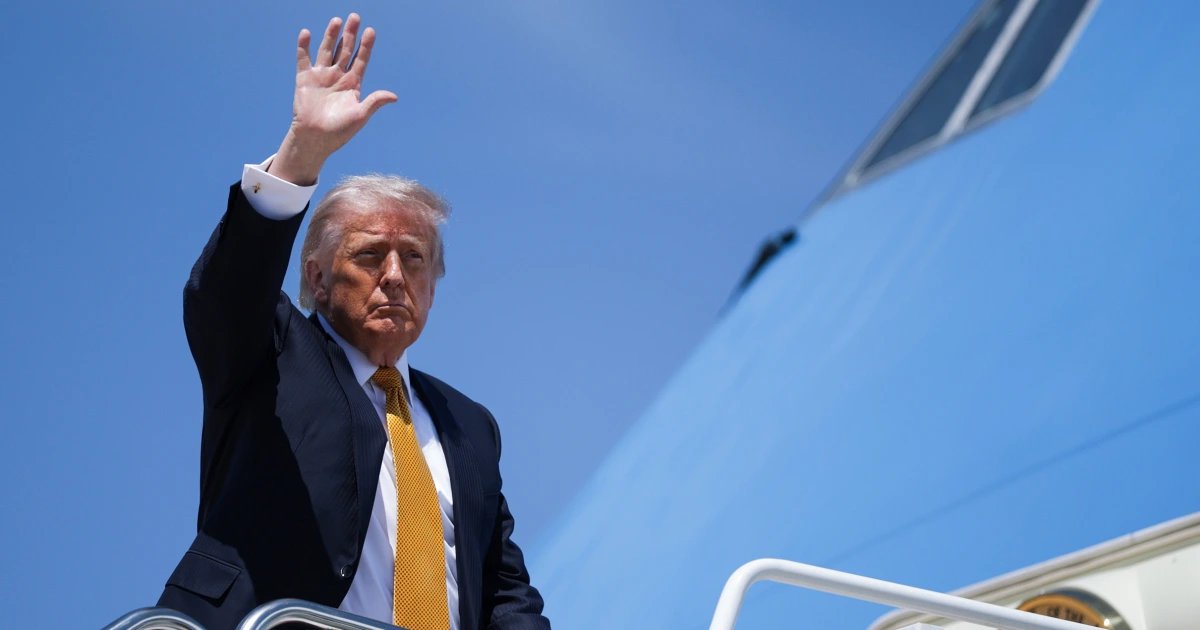
BEIJING — President Donald Trump will begin a two-day summit with Chinese President Xi Jinping in Beijing on Thursday as the world’s two biggest economies look to stabilize a trade truce against the backdrop of the simmering U.S. conflict with Iran.
Subscribe to read this story ad-free
Get unlimited access to ad-free articles and exclusive content.

Trump’s visit, the first by a U.S. president since his own trip nine years ago, will be “a wild one,” he promised this year, recounting at an event in Washington that he had told Xi “to put on the biggest display you’ve ever had in the history of China.”
Trump has consistently framed his relationship with Xi in personal and warm terms, but this trip carries more pressure than either side will publicly acknowledge.
Trade will be at the forefront of discussions, and Trump is bringing more than a dozen chief executives with him to Beijing, including Apple’s Tim Cook and Elon Musk, the chief executive of SpaceX and Tesla, who ran Trump’s Department of Government Efficiency. Nvidia CEO Jensen Huang joined Trump on the tarmac in Alaska for the second leg of the flight to China.
The goal this week will be to return to Washington with positive economic headlines and a reinforced personal relationship that both governments regard as the most consequential bilateral tie in the world. The possibility of extending the trade truce reached between Washington and Beijing last fall is on the agenda, as well.
Yet expectations for the summit’s outcomes are muted, with both leaders facing setbacks at home and abroad that may limit their room to maneuver. Trump, whose approval ratings are at their lowest point in his second term, has seen much of his global tariff regime struck down by U.S. courts and is engaged in an unpopular war with Iran that has stretched past an initial six-week timeline and sent gas prices soaring.
Xi has his own long-standing economic problems, including high youth unemployment, weak consumer demand and a crumbling property sector, as well as new concerns about how long China can withstand the energy shocks from the Iran war.
Former officials and experts say they also hope the summit will establish rules that give Trump more room to advance his domestic priorities.
“The bottom line, beyond the pageantry, is that the economic relationship needs to be placed on an equilibrium that would give the United States sufficient time to harden our resilience and our supply chains, for this president later in his term and for future presidents,” said Alexander Gray, the chief executive of American Global Strategies, who was a national security official in Trump’s first term.
“Soybean sales, that stuff is great, but the important thing is establishing the ground rules, establishing the left and right bounds of the relationship, establishing what is acceptable to both parties and what would constitute an unacceptable break in the economic equilibrium.”

FORSUBSCRIBERS

What to expect from Trump’s first day in China
02:33
Gray and others pointed to one clear guardrail Trump should aim to establish: “the Chinese understanding that it’s unacceptable for them to suspend rare-earth exports.”
China controls the dominant share of extraction and refining of rare-earth materials critical to modern technology and weaponry, and it has shown its willingness to use that leverage. “One of the things we know is that the Chinese are going to use that as a weapon as long as they have the ability to do so,” Gray said.
Trump and Xi are also expected to discuss creating a U.S.-China Board of Trade and a U.S.-China Board of Investment, which would allow both governments to manage the exchange of nonsensitive goods and establish a government-to-government forum on investment-related issues, according to White House principal deputy spokesperson Anna Kelly, who said deals touching on aerospace, agriculture and energy are all on the agenda.
“These agreements will further rebalance trade with China, while putting American workers, farmers and families first and safeguarding U.S. economic strength and national security,” Kelly said.
Low expectations and small wins
With only modest developments expected at the summit, both sides will instead be looking for narrow wins, said Allen Carlson, an associate professor of government at Cornell University and an expert on Chinese foreign policy.
“The summit itself, I think, is a win for China in terms of enhancing and burnishing China’s reputation as a great power, potentially as some sort of broker of peace in the Middle East,” Carlson said in an interview.
Trump, he said, is seeking greater assistance from China with Iran, with which it has close ties, but he “also, I think, is in need of a win on the world stage just in general.”
More from NBC News in China
Before he left Washington on Tuesday, Trump told reporters that he expected to have “a long talk” with Xi about the Iran war but that it was not an agenda item. The talks, “more than anything else,” he said, would be about trade.
“I don’t think we need any help with Iran. We’ll win it one way or the other,” he said.
Trump and Xi have spoken about the Iran war “multiple times,” a senior administration official told reporters, and Trump is expected to press Xi about the revenue and goods China provides to the Iranian government, as well as what the official described as “potential weapons exports.”
China, which Trump has credited with helping bring Iran to the negotiating table, has called for a diplomatic solution to the conflict and criticized U.S. sanctions on Chinese companies and people doing business with Iran as illegal.
Seeking stability
Xi will be eager to avoid having the Iran war dominate the talks, as Beijing believes the summit should focus on the U.S.-China relationship and Washington’s stance on Taiwan, the self-ruling democracy that Beijing claims as its territory.
The leader-to-leader diplomacy still offers opportunities. “I can’t imagine a meeting, probably not since Nixon and Mao met now decades ago, in which the two leaders have so much latitude with which to make decisions,” Kurt Campbell, who was deputy secretary of state in the Biden administration, said in a recent briefing with reporters. “They are virtually unencumbered by bureaucratic constraints on both sides.”
On Thursday morning, Trump will participate in a welcome ceremony and meeting with Xi before he tours the Temple of Heaven, a vast architectural masterpiece dating to the 15th century, followed by a state banquet in the evening. On Friday, he will join Xi for a tea and a working lunch before he departs for Washington. The two leaders are expected to meet at least one more time this year when Trump hosts Xi in Washington.
When Trump and Xi met last year in Busan, South Korea, on the sidelines of the Asia-Pacific Economic Cooperation summit, China committed to buy 12 million tons of American soybeans in 2025 and a minimum of 25 million tons annually for the following three years — after finalizing a trade truce that came after Trump hiked tariffs on goods from China as high as 145%. Trump also said China agreed to a one-year reprieve on rare-earth mineral export controls, an arrangement he described at the time as likely to be “routinely extended.”
The White House confirmed that discussions about extending that agreement are active but stopped short of signaling any announcement in Beijing. “It’s not clear yet if that’s going to be extended now or will need to be extended later,” a second senior administration official said. “What both sides want is stability.”
Washington’s leverage has narrowed on other fronts. The U.S. Court of International Trade last week struck down Trump’s 10% global tariffs, dealing a blow to one of the administration’s pressure tools and constraining the White House’s ability to enact the sort of coercive options that Trump has commanded during past talks.
“Last year, mostly what the Chinese agreed to do was restart exports of rare earths. And I do think there are real questions about whether they’ve actually followed through on that,” said Zack Cooper, a senior fellow at the American Enterprise Institute.
Trepidation about Taiwan
One issue that will be closely watched is what Trump says about Taiwan, which Beijing has vowed will come under its control by force, if necessary. Like most countries, the U.S. has no formal relations with Taiwan, but it is the island’s biggest international backer and arms supplier.
Trump has alarmed Taiwan supporters with comments suggesting that he and Xi are discussing U.S. arms sales to Taiwan, which some experts say would violate long-standing U.S. policy prohibiting such consultations with Beijing.
Asked Monday about selling arms to Taiwan, Trump said: “President Xi would like us not to, and I’ll have that discussion. That’s one of the many things I’ll be talking about.”
In addition to curbing arms sales, China hopes to encourage Trump to soften Washington’s stance on Taiwan’s political status.
“They’re keeping their eye on the prize, which they hope will be U.S. concessions on Taiwan, and they don’t want to allow either side to be distracted from that conversation because of events in the Middle East,” said Henrietta Levin, a senior fellow at the Center for Strategic and International Studies think tank, who was a senior official handling China policy during the Biden administration.
China has already indicated that it intends to bring up Taiwan, which Chinese Foreign Minister Wang Yi described as “at the very core of China’s core interests,” according to a readout of a recent call with Secretary of State Marco Rubio, who is on the trip with Trump.
China wants the U.S. to revise its stated policy on Taiwan’s status to favor “peaceful reunification” between the island and mainland China, instead of the current position that calls for “peaceful resolution.”
A senior administration official said that U.S. policy on Taiwan had not changed and that no changes were expected. The official also stressed that the U.S. has pressed for a fully funded Taiwan defense budget and that arms sales to Taiwan in Trump’s second term have outpaced four years under the previous administration.
Trump said Monday that he expects Taiwan will be part of discussions, saying “it always comes up” and suggesting that the island benefits from support from Japan and other regional partners and drawing a parallel with Ukraine.
Katherine Doyle and Jennifer Jett reported from Beijing and Dan De Luce and Andrea Mitchell from Washington.