Cabinet Office suggested Mandelson did not need security vetting, says Robbins as he describes ‘constant pressure’ from No 10 – live | Politics
Olly Robbins’ evidence to foreign affairs committee – snap verdict
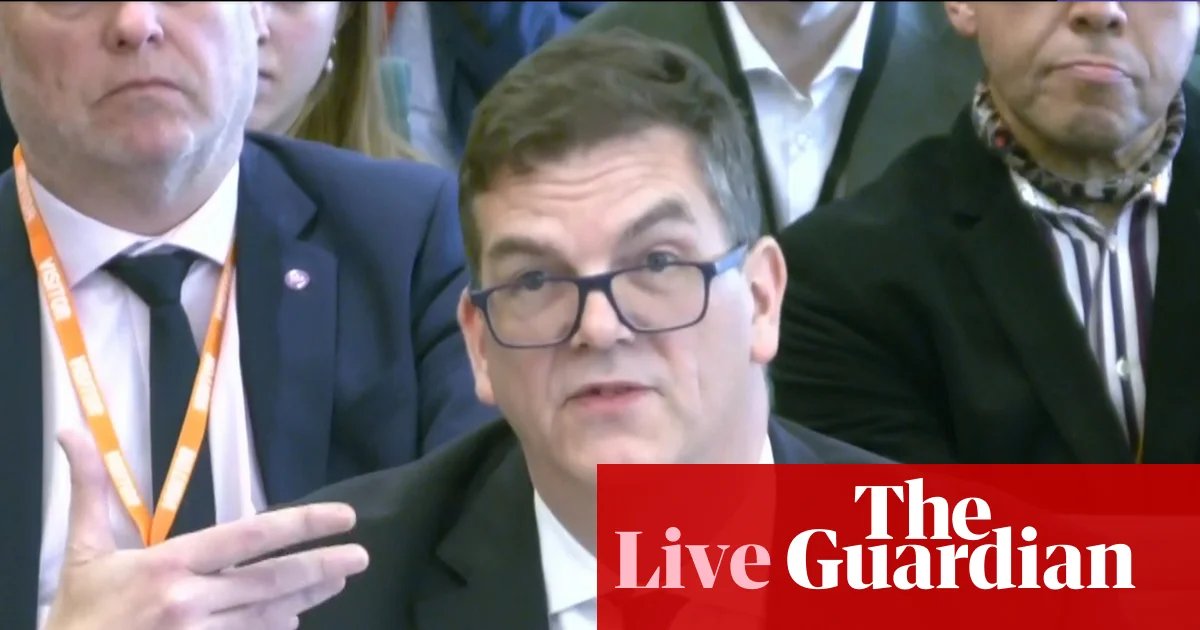
Olly Robbins did not come across as angry or bitter. Instead he came across as hurt and disappointed – but also conscientious, principled, and honest. He seemed to impress members of the foreign affairs committee, and that made his evidence all the more compelling.
Mostly, he did not say anything that directly contradicts what Keir Starmer told MPs yesterday. They both agree Starmer, and No 10 generally, were not told about the reservations UKSV (UK Security Vetting) had about Peter Mandelson. Robbins would not discuss the details of his conversation with PM where the PM told him he was being sacked, but he was passionate, and quite compelling, about the case for protecting the confidentiality of the DV (developed vetting) system. But there is still one hole in this part of the story. While No 10 is saying the UKSV file on Mandelson shows that “the recommendation from the vetting officer had been that DV should not be granted to Peter Mandelson”, Robbins claims he was not told that, at least in those terms. (See 9.56am, 10am, 10.10am and 10.47am.) On this point, the committee did not sound as if it was confident that it had got to the bottom of the story.
Robbins also claimed that knowing that refusing Mandelson’s vetting would cause a colossal problem for No 10 was not a factor in the decision to approve it. (See 11.23am.) Mmm. You can choose to believe that if you want.
But the most important part of Robbins’ evidence was what he said about the pressure he, and the rest of the Foreign Office, were under to push through the appointment. This was not a total surprise; but Robbins’ language was powerful. (See 9.14am, 9.22am and 10.22am.) And Robbins revealed that the Cabinet Office argued that Mandelson did not even need to be vetted. This is new, and highly embarrassing.
Kemi Badenoch is claiming that Robbins’ evidence shows that due process not followed. (See 12pm.) In fact, it shows the opposite; it is because due process was being follow that Morgan McSweeney was constantly on the phone telling the Foreign Office to speed it all. Badenoch is pushing this line because she is still trying to land the argument that Starmer lied to MPs, despite having to back down from the extreme version of this claim she was pushing last week.
Ed Davey’s response to the Robbins’ hearing (see 12.05pm) is more astute because he has focused on the one revelation from the hearing that will most shock Labour MPs: that No 10 was trying to find a diplomatic job for Matthew Doyle. The broadcasters have not been making this a key feature of their coverage yet because Doyle, despite being a peer (and independent one, now he has lost the Labour whip), is not really a public figure. But he is very well known to Labour MPs (he has a long history in the party, being a Labour adviser when Tony Blair was PM) and backbenchers will be astounded that Starmer was lining him up for a plum Foreign Office job. The fact that this is now public is bad for Starmer’s reputation with the people who will decide his fate.
Key events
SNP’s Westminster leader Stephen Flynn says Starmer should resign ‘today’ in light of Olly Robbins’ evidence
Stephen Flynn, the SNP leader at Westminster, has said that Keir Starmer should resign today in the light of the Olly Robbins revelations.
During the hearing Flynn posted this on social media.
double quotation mark I wrote to Keir Starmer warning him not to appoint Matthew Doyle to the Lords due to his connection with a convicted paedophile.He ignored those warnings.
And it now turns out he had even higher hopes for Doyle.
Just extraordinary.
And, after the hearing was over, Flynn released this statement.
double quotation mark The evidence from Olly Robbins this morning was devastating and definitive – Keir Starmer’s short and sorry time as prime minister is finished. He should now do the only decent thing and resign before the day is out.
Reeves extends windfall tax being extended for energy firms, partly to get them to switch to better pricing model
In the Commons Rachel Reeves, the chancellor, has just confirmed that she is extending the windfall tax for energy companies. She said this would generate more money for the Treasury, helping to pay for “government to support businesses and families”, and encourage electricity producers to move on to new contracts, which should lead to lower prices for consumers.
Jillian Ambrose wrote a preview of this announcement here.
Today Reeves told MPs:
double quotation mark I am announcing that I will extend the electricity generator levy past its scheduled conclusion in 2028. And ahead of that, I am increasing the rate of the electricity generators levy from 45% to 55%.This ensures that a larger proportion of any exceptional revenues from high gas prices are passed back to government, providing a vital revenue stream so that money is available for government to support businesses and families with the impacts of the conflict in the Middle East.
But, crucially, it will encourage older, low carbon electricity generators, which supply about a third of our power, to move from market pricing to fixed price contracts for difference.
Under new proposals set out by [energy secretary Ed Miliband] today, that will further weaken the link between high gas prices and the price paid for our electricity, and limiting the spikes in energy prices from driving up inflation and costs for households and for businesses.
Reeves also said she publishing new rules for “tiebacks”, which allow North Sea oil and gas producers to extend drilling into areas adjacent to existing fields that can be accessed via rigs already in place. She said these rules could lead to “tens of millions more barrels of oil and gas being available for UK supply”.
And she said she was removing barriers to investment in renewables too.
Yvette Cooper tells MPs she would not have approved of No 10 giving Matthew Doyle ambassador job
During Foreign Office questions in the Commons, Yvette Cooper, the foreign secretary, said she would not have approved of Matthew Doyle being made an ambassador.
Asked by the Lib Dem foreign affairs spokesperson Calum Miller about the revelation that came out when Olly Robbins was giving evidence to MPs this morning, Cooper said:
double quotation mark I was the home secretary at the time that I understand this has taken place, so I was not involved and don’t know the circumstances.I am, of course, extremely concerned at any suggestion that the permanent secretary or permanent undersecretary of the Foreign Office would be told not to inform the foreign secretary.
I can also confirm that the case that he raised, it would not have been an appropriate appointment.
In the Commons Rachel Reeves, the chancellor, is making a statement giving an update on the economic response to the Iran war, and what happened at her IMF meetings in Washington.
This will run for about an hour. Then MPs will open the emergency debate tabled by the Tories on the Mandelson vetting.
Olly Robbins’ evidence to foreign affairs committee – snap verdict
Olly Robbins did not come across as angry or bitter. Instead he came across as hurt and disappointed – but also conscientious, principled, and honest. He seemed to impress members of the foreign affairs committee, and that made his evidence all the more compelling.
Mostly, he did not say anything that directly contradicts what Keir Starmer told MPs yesterday. They both agree Starmer, and No 10 generally, were not told about the reservations UKSV (UK Security Vetting) had about Peter Mandelson. Robbins would not discuss the details of his conversation with PM where the PM told him he was being sacked, but he was passionate, and quite compelling, about the case for protecting the confidentiality of the DV (developed vetting) system. But there is still one hole in this part of the story. While No 10 is saying the UKSV file on Mandelson shows that “the recommendation from the vetting officer had been that DV should not be granted to Peter Mandelson”, Robbins claims he was not told that, at least in those terms. (See 9.56am, 10am, 10.10am and 10.47am.) On this point, the committee did not sound as if it was confident that it had got to the bottom of the story.
Robbins also claimed that knowing that refusing Mandelson’s vetting would cause a colossal problem for No 10 was not a factor in the decision to approve it. (See 11.23am.) Mmm. You can choose to believe that if you want.
But the most important part of Robbins’ evidence was what he said about the pressure he, and the rest of the Foreign Office, were under to push through the appointment. This was not a total surprise; but Robbins’ language was powerful. (See 9.14am, 9.22am and 10.22am.) And Robbins revealed that the Cabinet Office argued that Mandelson did not even need to be vetted. This is new, and highly embarrassing.
Kemi Badenoch is claiming that Robbins’ evidence shows that due process not followed. (See 12pm.) In fact, it shows the opposite; it is because due process was being follow that Morgan McSweeney was constantly on the phone telling the Foreign Office to speed it all. Badenoch is pushing this line because she is still trying to land the argument that Starmer lied to MPs, despite having to back down from the extreme version of this claim she was pushing last week.
Ed Davey’s response to the Robbins’ hearing (see 12.05pm) is more astute because he has focused on the one revelation from the hearing that will most shock Labour MPs: that No 10 was trying to find a diplomatic job for Matthew Doyle. The broadcasters have not been making this a key feature of their coverage yet because Doyle, despite being a peer (and independent one, now he has lost the Labour whip), is not really a public figure. But he is very well known to Labour MPs (he has a long history in the party, being a Labour adviser when Tony Blair was PM) and backbenchers will be astounded that Starmer was lining him up for a plum Foreign Office job. The fact that this is now public is bad for Starmer’s reputation with the people who will decide his fate.
Ed Davey says revelation about No 10 wanting diplomatic job for Matthew Doyle ‘incredibly damning’ for PM
In his response to the hearing, Ed Davey, the Lib Dem leader, has focused on the revelation about No 10 wanting for find an ambassador’s job for Matthew Doyle. (See 10.29am and 11.03am.)
double quotation mark This is incredibly damning for Keir Starmer.Not content with appointing Peter Mandelson as US ambassador despite his links to Epstein, he tried to appoint another man with a known friendship with a sex offender.
This is not just a lapse in judgment, it’s a pattern of behaviour.
Every day this scandal gets worse, and it becomes clearer that the only way to draw a line under it is for Starmer to go.
Badenoch claims Robbins’ evidence shows Starmer misled MPs, because ‘due process’ not followed in Mandelson appointment
Kemi Badenoch claims that Olly Robbins evidence shows that “due process” was not followed in the appointment of Peter Mandelson, and that therefore Keir Starmer misled MPs when he claimed it had been.
She has posted this on social media.
double quotation mark The evidence from Olly Robbins is devastating to Keir Starmer.It is clear that No10 not only made the appointment before vetting was completed, but that Mandelson was already acting as the Ambassador before the vetting – even seeing highly classified documents.
With this, and the ‘constant pressure’ No10 applied to the appointment and their ‘dismissive attitude’ to vetting Mandelson, it is now absolutely clear that ‘full due process’ was not followed.
Keir Starmer has misled the House.
The final question in the session came from John Whittingdale, who asked if he was confident that the government would comply in full with the Commons humble address saying the government had to publish all paperwork relating to Mandelson’s appointment, and messages between Mandelson and officials.
Robbins said it was a very wide-ranging motion. In theory, a huge amount of information would have to be disclosed. This had to be done in a way that would not create an “unmanageable burden” and an “unmanageable security risk” he said.
But he said it was now up to the Foreign Office and the Cabinet Office to explain what they were doing about it.
Robbins declines to discuss conversation with Starmer when he was sacked, implying legal proceedings likely
Yesterday Keir Starmer described a conversation he had had when he sacked Robbins, saying that he did not agree with the Foreign Office permanent secretary about his argument about not being able to disclose information about Mandleson’s vetting process.
Asked what he had told the prime minister, Robbins said that was a legitimate question, but he said he could not speak about that.
Referring to possible legal proceedings about his sacking, Robbins said that he was in “unknown territory” and for the sake of his family he had to keep quiet for the time being.
(Permanent secretaries who get sacked in circumstances like this normally end up negotiating some sort of payoff. What gets said in public can influence this.)
Robbins says he’s ‘desperately, desperately sad’ about being sacked
Asked about his reaction to being sacked, Robbins said:
double quotation mark The very short answer is I don’t fully understand the reasons that I’m in the position I am in, but that is for a separate process for me to try to get to the bottom of.As a human being, I’m desperately, desperately sad about it.
I love that job, I love that institution, I was proud to serve this government and any government that might follow it.
I hope I was doing it to the best of my ability. I was certainly doing it as hard as I possibly could.
I had wonderful colleagues who I miss deeply and the issues we were dealing with, and my colleagues are still dealing with, are of profound importance to the success of this government and the success of the country.
It’s been the proudest part of my career to lead that institution because of their work, not because of mine.
I just feel intensely proud of the people I’ve led and I wish them every success and wish I could still be with them.
Asked if he would have done anything differently, Robbins said there were various aspects of the system I think could be improved”.
But he said he was concerned about the way that the British state was “dissecting itself” in public over this.
He said he thought anything that undermined the integrity of the security vetting process could pose a risk to people working in embassies in Moscow or Beijing.
And he said he found himself “wondering who this helps” – implying this is a controversy that will help hostile states.
Emily Thornberry, the committee chair, challenged what Robbins said about how security vetting should not stop the state employing people with “interesting” lives. She said there was “interesting” – and then there was Peter Mandelson, and the threats that he posed.
Robbins said that the Cabinet Office due diligence process (which he thinks Mandleson should have failed – see 10.38am) covered Mandelson’s public record.
He said security vetting served a different purpose.
double quotation mark There’s not a sort of big surprise in the fact that Peter Mandelson had an interesting life.What I say to you still is that DV is for a different purpose. It’s to establish vulnerabilities that lead to an unmanageable risk to UK national security. That’s the process I hope that we undertook in good faith.
Thornberry said Mandelson was a threat; he was leaking state secrets to a bank.
Robbins said that was not the reason for Mandelson being sacked; those emails only came out after he was sacked.
Robbins says security vetting shouldn’t be ‘pass/fail piety test’, because UK state needs ‘interesting’ people working for it
Robbins said that security vetting should not become a “pass/fail piety test”. He explained:
double quotation mark If we turn DV [developed vetting] into a pass/fail piety test, what we end up doing is robbing the British state of a lot of very, very capable people with complicated lives and potential vulnerabilities.And I really, really don’t want that for the sake of this country.
If anything, this government needs to be served by an ever increasing range of people with broad experience and interesting lives, not suddenly find that the only people we can employ in sensitive roles are ones who raise no issues whatsoever.
Robbins says blocking Mandelson would have caused ‘real problem’ for PM – but claims this wasn’t reason for approval
Asked what would have happened if the Foreign Office had refused to give Mandelson developed vetting clearance, Robbins said that this would have caused “a real problem” for the government and the country.
He went on:
double quotation mark I was very conscious that if we went through the rigour of our process and decided against granting clearance that would have caused a real problem for the government and a problem for the country,I was conscious of that without letting it influence my judgment, let alone transferring any of that atmosphere on to the people charged with actually making that assessment.
Robbins also said that vetting was one of the hardest bits of his job.
double quotation mark I hate doing it, honestly. It’s some of the most emotional things I got involved with in my time in the job.I take those responsibilities extremely seriously. I have been prepared to follow through on tough advice.
Robbins says leak of Mandelson vetting story to Guardian was ‘grievous breach of national security’
Robbins said the leak to the Guardian of details of Mandelson’s vetting was “a grievous breach of national security”. He suggested he thought the leak happened once information about the UKSV process in this case was passed on to the Cabinet Office and No 10 as part of the process of scrutinising which documents will have to be published to comply with the Commons humble address.
He explained:
double quotation mark [This] probably flows from the rest of the evidence I’ve been giving you this morning. I think the system does not work if candidates for it don’t understand that this is an entirely different category of protection and losing that – I know it’s a cliche, but that trust, once gone, cannot be got back.Thousands of people go through this process. Thousands and thousands of documents and sensitive issues and operations depend upon it. And I am struck and saddened that within I think days – probably only a small number of days – the Cabinet Office for their own reasons, deciding to open that up to share what they thought they’d found and their perceptions of it internally with No 10.
I’m not making accusations at anybody. It’s not my business to do so. I hope they’re being very rigorously investigated and the prosecutions will result, because this is a grievous breach of national security.
Asked to clarify this, Robbins said that he was not an investigator. But he said he was able to “put two and two together”. He said soon after Keir Starmer was told about the UKSV’s conclusions about Mandelson (on Tuesday last week, at the meeting described in this minute) the story was in the Guardian.
Robbins explains why he disagrees with Starmer’s claim he should have been given details of Mandelson’s vetting
Robbins told the committee that he did not accept Keir Starmer’s argument that he should have been given more details of Mandelson’s security vetting.
He said:
double quotation mark I hope it’s clear from everything I have said so far that I believe that’s a misunderstanding and a dangerous misunderstanding of the necessity of confidentiality of the process.I’ve been interested, of course, over the last couple of days to read Lord Hague on this today and David Lammy even on Saturday, the former foreign secretary, deputy prime minister, where both have said in different language that they have never had vetting issues discussed with them in all their time as a minister and nor would they expect to.
I’m afraid that’s exactly the culture I have been brought up in. It’s supported by guidance. You are not supposed to share the findings and reports of UKSV other than in the exceptional circumstances where doing so allows for the specific mitigation of risk.
Robbins said he was told not to tell foreign secretary about No 10’s proposal to give Matthew Doyle diplomatic post
And here is more from what Robbins told the committee about the proposal for Matthew Doyle to get a diplomatic job. (See 10.29am.) Robbins said he was told not to discuss this with the foreign secretary, David Lammy.
Robbins said there were “several discussions initiated by No 10 with me about potentially finding a head of mission opportunity for Matthew Doyle who was then the prime minister’s director of communications”.
He went on:
double quotation mark I was under strict instruction not to discuss that with the then foreign secretary, which was uncomfortable.
Robbins said he “felt quite uncomfortable” about the proposals and kept “giving advice that I thought this would be very hard for the office and was hard for me personally to defend”.
He said:
double quotation mark I found it very hard to think how I would explain to the office what the credentials of Matthew were to be in an important head of mission role when I was in danger of making very senior, very experienced diplomats leave the office.