After collapse of U.S.-Iran talks in Pakistan, the path to peace is less clear
A day of talks, one “final” offer, no resolution.
Subscribe to read this story ad-free
Get unlimited access to ad-free articles and exclusive content.

Negotiators from Washington and Tehran left talks in Pakistan on Sunday with little to show for it and a return to fighting between the two sides looming large.
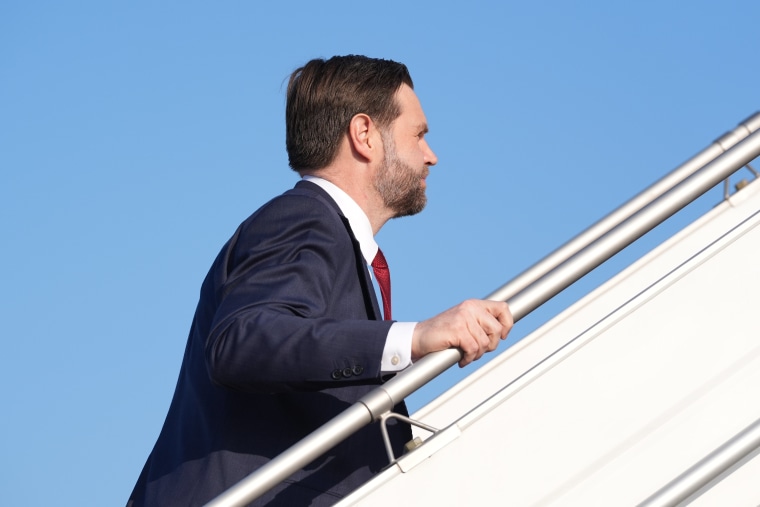
Vice President JD Vance and Iranian officials both said significant differences remain in the quest for a deal that could bring a more permanent end to the war, though the fragile two-week ceasefire remains in place.
“We were negotiating in good faith,” Vance said at a press conference. “We leave here with a very simple proposal, a method of understanding that is our final and best offer. We’ll see if the Iranians accept it.”
With just eight days left in the current ceasefire, the failure to find a more permanent agreement in Pakistan raises the prospect of a return to a war that saw President Donald Trump threaten to wipe out an entire civilization, with the death toll already in the thousands and the impacts rippling through the global economy.
The U.S. failed to gain Iran’s trust during negotiations in Islamabad, Iran’s parliament Speaker Mohammad Bagher Ghalibaf, who led the delegation in Pakistan, said Sunday.
In a post on X, Ghalibaf said his colleagues presented “forward-moving initiatives” but the U.S. was unable “to gain the trust of the Iranian delegation,” pointing to a history of failed talks and agreements.
Iranian state media said “excessive demands” sank the possibility of a deal.
The sides could not find common ground on a number of key matters, including the Strait of Hormuz and the country’s development of nuclear technology, Islamic Republic of Iran Broadcasting said on Telegram.
Key among the differences in Pakistan was whether Iran would commit to not seeking to develop a nuclear weapon, Vance said.

FORSUBSCRIBERS

Trump and Hegseth lean into religious framing of Iran war
04:11
“We haven’t seen that yet. We hope that we will,” he said. A past deal to limit Iran’s nuclear ambitions in exchange for lifting economic sanctions was negotiated under Barack Obama in 2015, but the first Trump administration ripped up that deal in 2018.
Trump said Sunday that the meeting went well, and “most points were agreed to.”
“But the only point that really mattered, NUCLEAR, was not,” he wrote on Truth Social.
Pakistan, whose government mediated the U.S.-Iran talks, has urged the U.S. and Iran to continue their ceasefire despite peace talks in Islamabad concluding with no agreement to end the war.
In a post on X, Foreign Minister Ishaq Dar characterized the 21-hour summit as both intense and constructive, saying the nations should maintain the talks’ “positive spirit,” move forward with the goal of regionwide “peace and prosperity” and vow to continue to withhold attacks against each other.
“It is imperative that the parties continue to uphold their commitment to ceasefire,” he said.
As that takes place, he said, Pakistan will stand by.
Iranian officials have not released a recent death toll, but the U.S.-based rights group HRANA put the total number of people killed in Iran at almost 3,400, including more than 1,600 civilians.
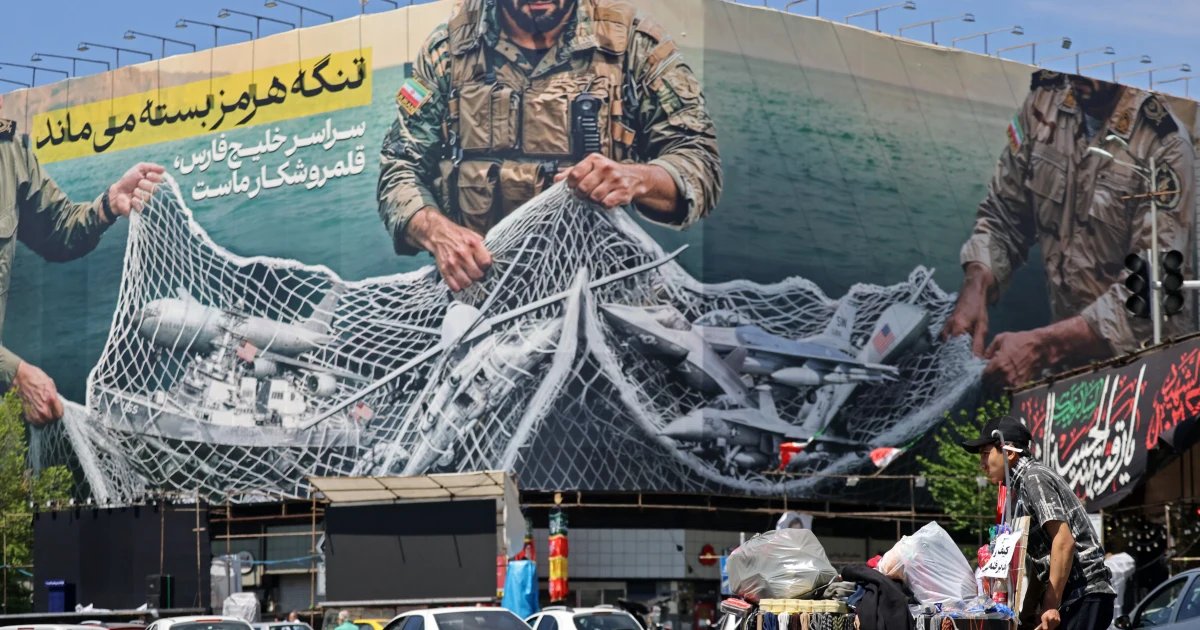
Traffic through the Strait of Hormuz, a vital waterway through which 20% of the world’s oil passed before the war, remains at a virtual standstill and oil prices continue to rise.
U.S. Central Command said U.S. warships are setting conditions to reopen a safe passage after Iran laid mines in the key shipping lane. Meanwhile, Trump said the U.S. would impose its own blockade on the Strait, accusing Iran of trying to extort vessels for passage.
“Effective immediately, the United States Navy, the Finest in the World, will begin the process of BLOCKADING any and all Ships trying to enter, or leave, the Strait of Hormuz,” he wrote on Truth Social. In a second post, he again accused Iran of seeking to block the Strait, despite saying he would blockade it himself.
But with Iran retaining leverage over the strait and the risk to tankers unresolved, attention turns to what comes next. Analysts say the failure in Islamabad reflects deeper, long-standing divisions that go far beyond a single round of talks.
“It is no surprise that the U.S.-Iran talks did not end in a diplomatic breakthrough,” Fawaz Gerges, a professor of international relations at the London School of Economics, told NBC News.
The Iranian side sees the Strait of Hormuz as “their most potent weapon,” he added, while the Americans want it to “open now.” A U.S. insistence that Tehran limit uranium enrichment and turn over its current stockpile, meanwhile, is a “nonstarter” for the Iranians, he said.
Vance and his team went into the negotiating session really asking the Iranians “to capitulate,” Gerges said. “The Iranians will say, ‘You haven’t defeated Iran. We will not surrender, we want to bargain, we want to negotiate, because we have asserted our control over the Strait of Hormuz.’”
Danny Citrinowicz, a senior researcher on Iran at the Institute for National Security Studies, which is affiliated with Tel Aviv University in Israel, said that both sides had come to the table with the assumption they had won.
“It’s not that the Iranians want escalation, but I think that for them, they prefer escalation to dictation,” he said. “They think that they have the upper hand.”
While Vance said the “final” U.S. offer was on the table, Citrinowicz said that there is “no doubt behind the scenes mediators are trying to reach common ground.”
“You cannot, after 21 hours, say it’s all over,” he said. “These are complex issues.”
The 2015 nuclear agreement took almost two years to be finalized, Gerges noted, and that was not sealed during a war. “I think there’s a long way to go,” he said.