HHS announces $144 million program to study effect of microplastics on the human body
The Department of Health and Human Services will is introducing a first-of-its-kind program to study microplastics and the effect they have on the human body, HHS Secretary Robert F. Kennedy Jr. announced Thursday.
Kennedy said the $144 million national program will be called STOMP, which stands for “Systemic Targeting of MicroPlastics.” The program will bring toxicologists, data scientists and other experts together to create standardized tools capable of detecting and quantifying microplastics in the human body, research the effect they have on humans, and develop targeted strategies to remove them from the body, Kennedy said.
“We are not dealing with a distant or theoretical risk. We are dealing with a measurable, growing presence inside the human body,” Kennedy said, after citing research that showed microplastics present in human organs, blood and the placenta. The program’s research will prioritize those at greatest risk, he said, including pregnant people, children and workers with high exposure rates.
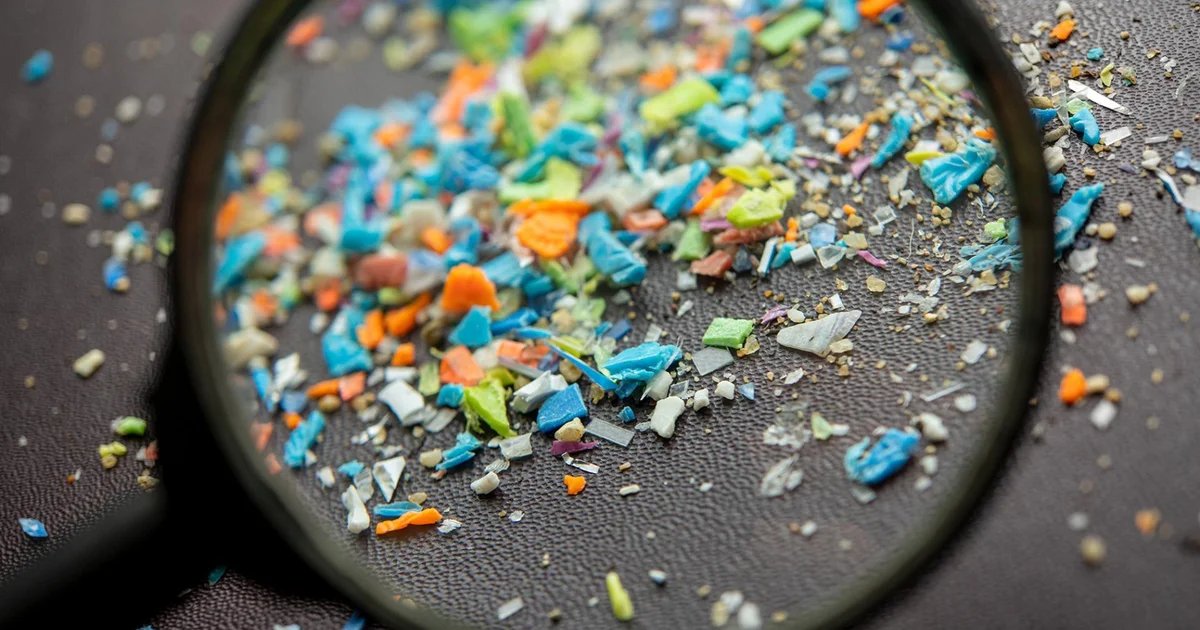
Microplastics are tiny particles from larger plastic items that have been detected in the human body and external sources. They enter the water supply through littering, storm runoff, and more. The particles, which are less than five millimeters in size, cannot be fully removed by traditional water filtration methods, according to the World Health Organization.
Environmental Protection Agency Administrator Lee Zeldin also announced that the agency has added microplastics to its contaminant candidate list for the first time, opening the door for future regulations.
The contaminant candidate list is a list of substances that are not subject to proposed or existing drinking water regulations, but are “known or anticipated to occur in public water systems,” according to the EPA’s website. Adding a substance to the list does nothing to regulate it or limit its use, but prioritizes funding, research and information collection to learn more about how these products affect drinking water.
“This is a direct response to the concern of millions of Americans who have long demanded answers about what they and their families are drinking every day,” Zeldin said.
Dr. Celine Gounder, CBS News medical contributor and KFF editor-at-large for public health, said adding microplastics to the CCL is “the beginning of a long timeline, not the end of one.”
“Researchers have found that microplastics are widespread in water and the human body, which suggests potential health risks, but we don’t yet have the kind of evidence regulators require to set legal limits,” Gounder said.
Complicating efforts to set legal limits is a lack of standardized measuring system for microplastics, and no national data showing how much microplastics are actually affecting drinking water. Gounder said there also needs to be “clearer evidence linking typical exposure levels to specific health outcomes.”
The contaminant candidate list that Zeldin announced, or CCL 6, is a draft. There will be a 60-day public comment period before it is finalized. The CCL is updated every five years.
Pharmaceuticals are also set to be added to the contaminant candidate list, Zeldin said. Medications enter the water supply through human waste and improper disposal, Zeldin said. The EPA has also released human health benchmarks for 374 pharmaceuticals, giving authorities a “critical new tool to assess risk and take action when drug residues are found at concerning levels,” Zeldin said.
The existing list, CCL 5, includes 66 chemicals, 12 microbes and three chemical groups: Pre- and polyfluoroalkyl substances, or PFAS, disinfection byproducts and cyanotoxins. The draft list for CCL 6 includes 75 chemicals, nine microbes and four chemical groups: PFAS, disinfection byproducts, pharmaceuticals and microplastics. CCL 6 removes cyanotoxins, or compounds produced by some algae, as a chemical group.
CCL 6 is expected to be signed by November 17, 2026, after the public comment period ends and after the EPA consults with its independent Science Advisory Board.
To reduce exposure to microplastics, Gounder recommends avoiding bottled water, not heating food in plastic containers, and improving indoor air quality, since water and air are the major exposure routes. But it is impossible to entirely avoid microplastics because of their prevalence, Gounder said.