Ukraine battles a brutal Russian offensive as Iran war takes the world’s focus
KYIV, Ukraine — With the world’s attention shifting to the escalating conflict in the Middle East, Russia is pushing forward with a spring offensive in Ukraine despite months of peace talks that no longer appear to be Washington’s priority.
While Moscow seeks to regain momentum and capture more territory four years into its full-scale invasion, Ukrainians caught up in the conflict told NBC News their hopes that President Donald Trump will settle their war while waging another in Iran are dwindling.
The Iran war is “definitely a distraction,” Senior Sgt. Volodymyr Rzhavskyi said. Rzhavskyi, 44, has been serving since 2014, when Russian-backed separatists first began fighting in Ukraine’s east. He has little faith in the peace talks, but remains “a hopeless optimist” that Ukraine “can win in this war, not just hold on, but win.”
In a phone interview from the Donetsk region, where he is currently stationed, Rzhavskyi said that with Trump preoccupied, Ukraine must continue to defend itself. “This is not a sprint, it’s a marathon,” Rzhavskyi said. “We must dissuade the Russians from encroaching on anything Ukrainian for at least another hundred years.”
Oleksandr, a lieutenant who is serving in Ukraine’s south and did not want his last name or age revealed due to the sensitive nature of his service, said he is also ready to fight on. “As long as they push, we will kill them,” he said in a series of audio notes from the front lines. “We see that the peace process is deadlocked. Russia is asking for what we can’t give it — our land,” he added.
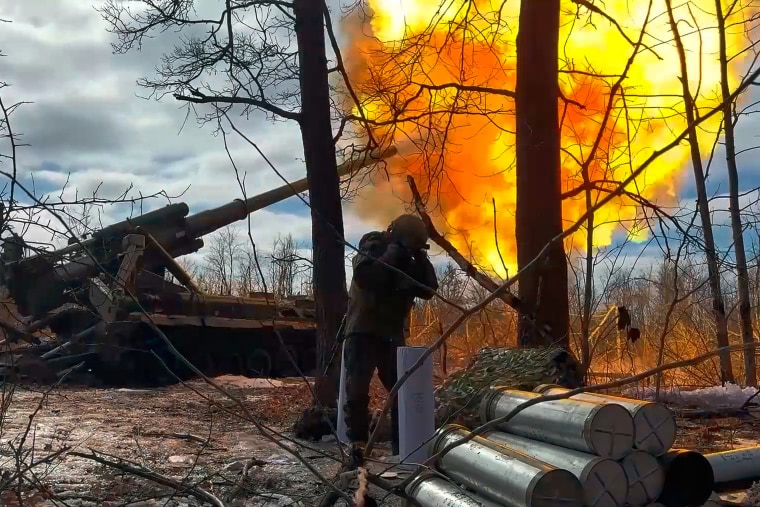
Russia’s latest push to alter a largely static front line has come at a steep human cost. In just one week, more than 8,710 Russian troops were killed or seriously wounded in Ukraine as Moscow intensified its “offensive actions,” Ukraine’s commander in chief, Col. Gen. Oleksandr Syrskyi, said Monday. His Russian counterpart, Gen. Valery Gerasimov, said last week that his troops were on the offensive “across the entire front line” and had taken 12 Ukrainian settlements in the first two weeks of March. Neither Russia nor Ukraine regularly reports the number of their own war dead, wounded or missing.

FORSUBSCRIBERS
The Washington-based Institute for the Study of War, which has analyzed the battlefield situation in Ukraine since 2022, said in an assessment on Monday that the reported Russian casualty rate during the spring offensive was “unsustainable given Russia’s current recruitment rates and would likely degrade Russia’s ability to wage such large assaults in the mid- to long-term.” It remains unlikely this year that Russian forces will seize the so-called “Fortress Belt,” the main fortified defensive line in the fiercely contested eastern region of Donetsk, the assessment said, with Moscow likely to make some tactical gains at a significant cost.
The land that Ukraine still holds in Donetsk is at the center of a stalemate in negotiations after Kyiv refused to give it up in exchange for peace. Russian President Vladimir Putin has said he would seize Donetsk by force and take full control of the Donbas region, composed of the Donetsk and Luhansk regions, should the diplomatic track fail.
A core part of Russia’s information campaign is that a Ukrainian defeat is somehow inevitable because Moscow has a continuous battlefield momentum, said Christopher Tuck, an expert in conflict and security at King’s College London. But the events of the last couple of months show that those assumptions are false, Tuck said.
“While Ukraine remains under sustained pressure, its battlefield performance demonstrates that its forces continue to be resilient and adaptive, capable of conducting successful local counterattacks and of leveraging new technologies and methods, especially in realms such as drones and artificial intelligence, to offset their numerical inferiority,” he said, referring to Ukraine’s lingering struggle to recruit more troops.
Meanwhile, Russia continues to be wedded to a method of war that relies on attrition, scale and firepower.
“Overall, this has allowed Russia to retain the initiative in some areas, but it absolutely has not established for Putin an irreversible path to victory,” Tuck said. “At the moment, neither side believes the war has been decided, and so the conflict is likely to continue.”
Even as his own war with Iran rages, Trump has pressured Ukraine to come to an agreement, accusing President Volodymyr Zelenskyy of stalling the peace process in an interview with NBC News earlier this month. Zelenskyy told Reuters on Wednesday that Washington had tied security guarantees for Ukraine, critical to the proposed peace deal, to Kyiv ceding the entire Donbas to Russia.
Trump told reporters Tuesday that Russia and Ukraine were “getting close” to a deal, but conceded he has been “saying that for a while” after well over a year of mediation efforts. The Kremlin responded on Wednesday, saying it expects the U.S. to “continue its goodwill” as it also denied Thursday that Putin has lost interest in a peace settlement since the Iran war broke out.
Iran’s retaliatory attacks on neighboring Persian Gulf states have disrupted the trilateral talks between the U.S., Ukraine and Russia, some of which took place in the Middle East in the weeks before the Iran war. They have yet to resume in the same format.
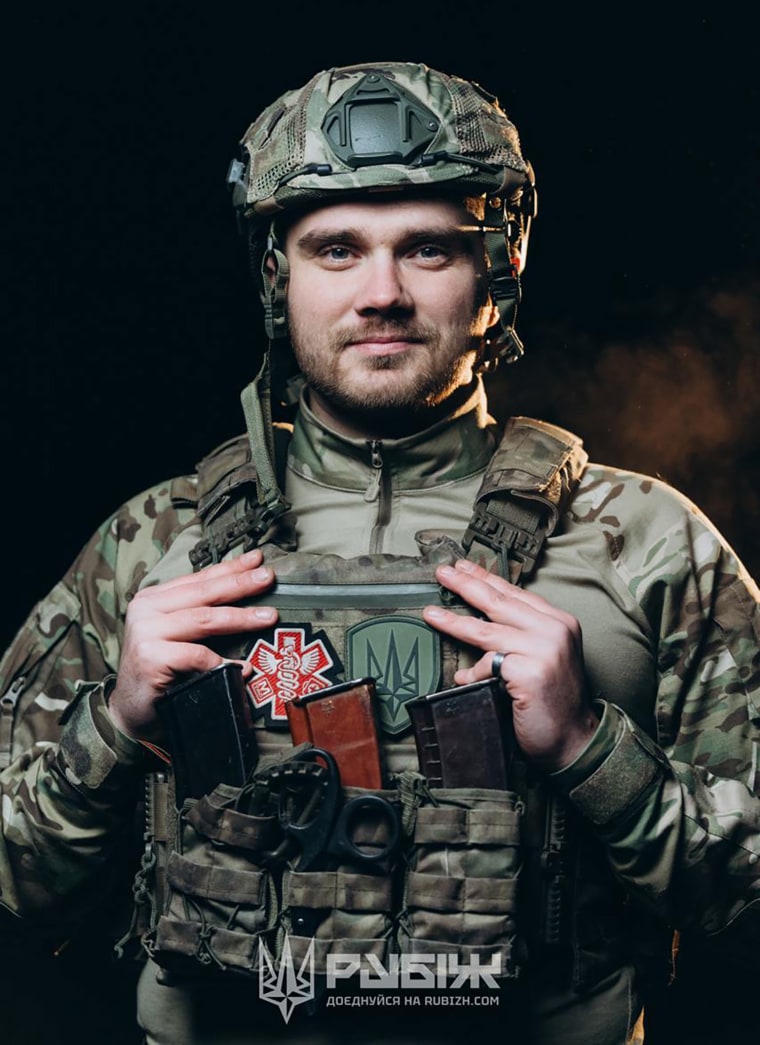
Military medic Vadym, who did not want to reveal his last name due to his service on the front lines in the Donetsk region, said he and his colleagues witness firsthand the human cost of the raging war, rescuing wounded soldiers daily. They harbor “very few illusions” that diplomacy can lead to peace on Ukraine’s terms, Vadym, who worked at a Kyiv hospital before he joined the army in 2024, said on the phone Tuesday. “There is a feeling that we are in a deadlock, and no one wants to give up territories or ambitions,” he said.
The escalation in the Middle East has drained both attention and resources away from Ukraine, Vadym, 31, added. While he thinks Trump has not fully lost his interest in settling the war, the attention of global leaders can only stretch so far. “It’s like dealing with one patient, where all your resources are focused on that person, versus looking after an entire ward.”
Oleksandr, the lieutenant, hopes that Trump is “just more focused on a quick victory in Iran right now” and has not fully lost interest in Ukraine. The fates of the two conflicts are linked, he added, as Tehran was indirectly involved by supplying Russia with weapons and expertise.
Retaining the world’s attention on his nation’s fight is exactly what Zelenskyy appeared to try to do as he went on a tour of European capitals last week to ramp up support for Ukraine.
Zelenskyy told the BBC he had a “very bad feeling” about the impact of the U.S. operation in Iran on the war in Ukraine, fearing a deficit of Patriot missiles, which are being used to deflect Iran’s retaliatory strikes on its neighbors. The missiles are in short supply in Ukraine as it continues to deflect Russia’s near daily attacks.
But Tehran is Russia’s ally, and any damage to its political regime is “good news” for Ukraine, said Sviatoslav Yurash, a member of Ukraine’s parliament and a serving soldier. Kyiv should concentrate on helping its allies to contain “the evil multiplied by countries like Iran and Russia.”
Yurash said he is “hoping against hope” that negotiations will succeed, but the reality is that Russia can’t be trusted when it comes to peace agreements. “I can’t focus on optimism when I understand that Putin continues to talk about his desires and dreams to take all of Ukraine.”