Iran’s foreign minister denies seeking war with its neighbors
Since the U.S. and Israel launched attacks across Iran last weekend, the Islamic Republic has retaliated by firing missiles and drones across the region, striking Bahrain, Qatar, the United Arab Emirates and other countries.
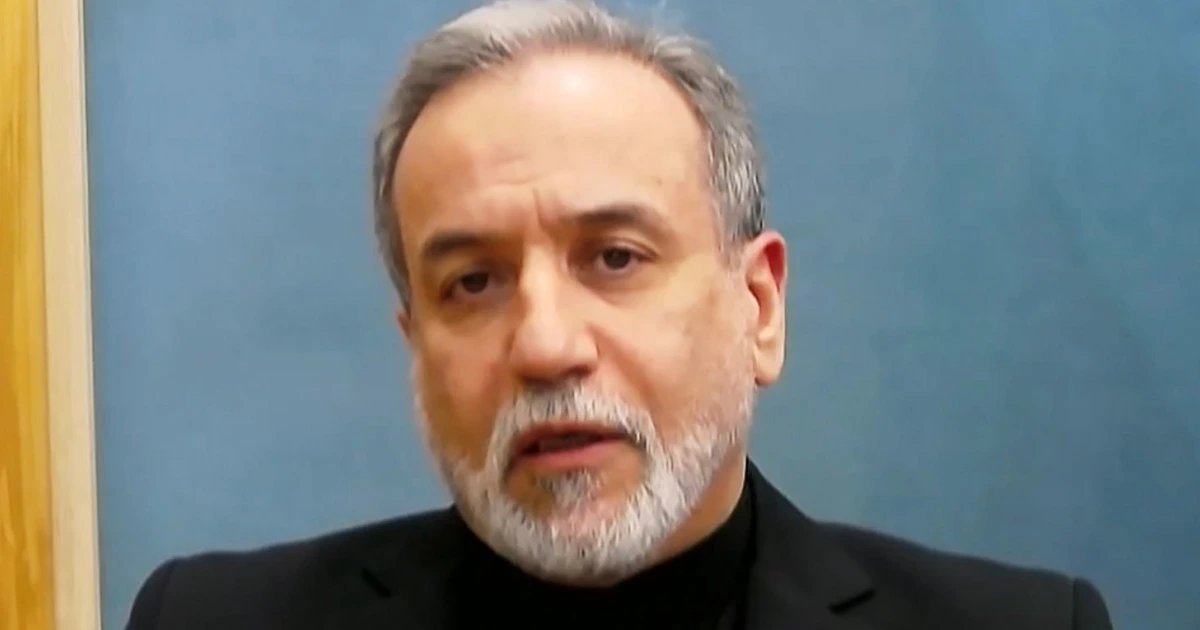
But Iranian Foreign Minister Abbas Araghchi said Thursday in an interview with “NBC Nightly News” anchor Tom Llamas that Iran had not made a decision to start a war with its neighbors.
“We have not attacked our neighbors. We have not attacked Muslim countries,” Araghchi said. “We have attacked American targets and American bases, American installations, which are unfortunately located in the soils of our neighbors.”
Araghchi said he has spoken with the foreign ministers of these countries to explain that they are not the target.
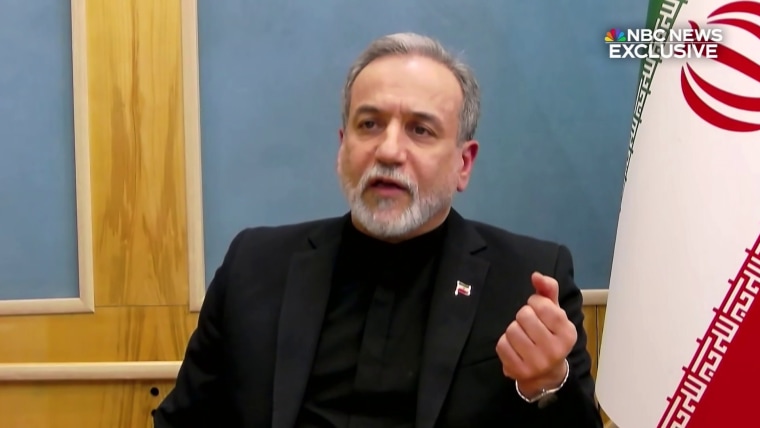
Llamas noted that some of the Iranian attacks have hit civilian targets, including residential areas in Bahrain, hotels in Dubai and the international airport in Kuwait, but Araghchi dismissed any such attacks as “collateral damage.”
The instability in the region has led to a spike in oil prices and a drop in the U.S. stock market.
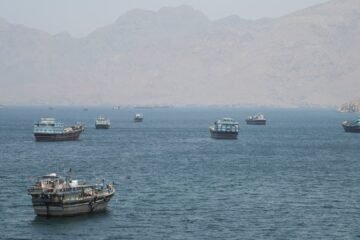
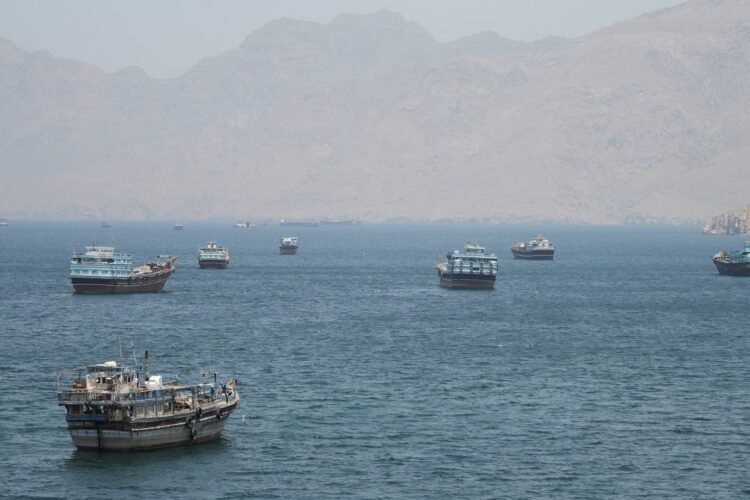
For years, Iran has threatened to turn the Strait of Hormuz, a key waterway through which 20% of the world’s oil passes, into a free-fire zone if the country is attacked.
It would not be the first time that marine traffic has been disrupted in the Persian Gulf: During the Iran-Iraq war in the 1980s, dozens of merchant vessels were attacked by both parties in what broadly became known as the “tanker war.”
On Monday, Iranian Revolutionary Guard Brig. Gen. Ebrahim Jabbari told state TV that the strait is closed and that any ships passing through would be set on fire.
Asked by Llamas about this threat, Araghchi said there had been no threat and the strait is open.
“They have not closed it. It is the ships and tankers who don’t try to pass through the, to cross the strait, because they are, you know, concerned about being hit by either side,” he said. “So we have no intention to close it right now, but as the war continues, we will consider every scenario.”
The naval war has already spread outside the region. Defense Secretary Pete Hegseth said Wednesday that a U.S. submarine had sunk an Iranian military ship with a torpedo in the Indian Ocean, a move that Araghchi, in a post on X, said would set a precedent the U.S. would “bitterly regret.”
In the interview with Llamas, Araghchi said that the ship was unarmed and on a training exercise and that the attack, which killed 87 sailors, was a “war crime,” though he did not provide any evidence to support the claim.
“You know, when an unarmed ship is attacked with no reason, and group of big number of sailors are killed without taking part in any battle, that would set a precedent,” he said.
The spread of the war across the region has also raised the question of whether Iran’s key allies, Russia and China, may join the fray in some form.
“They are supporting us politically, and otherwise,” Araghchi said, but would not get into details of whether that includes military support.
“I’m not going to give the details of our cooperation with other countries, right in the middle of the war,” he said.
Araghchi noted that he had heard the bombing by the U.S. and Israeli military in recent days but was not concerned for his own personal safety.
“Everybody maybe fear for his life in the time of war, but you know, I am doing my job. I am doing my duty, and I would be honored if my blood is shed for the sake of my country. But for the time being, there is no fear of that,” he said.
Before the war kicked off last weekend, Iran had struggled with a period of great internal unrest.
Mass protests were sparked in late December by economic grievances as the rial currency crashed and inflation soared. They morphed into one of the biggest challenges the Iranian regime had faced in the theocracy’s 47-year history, as thousands of people took to the streets to oppose the ruling clergy.
Iranian security forces carried out the most brutal crackdown in Iran’s modern history.
The U.S.-based Human Rights Activists News Agency last week put the number of people killed in the protests at more than 7,000, with nearly 12,000 cases “under review.”
President Donald Trump told a group of reporters on Tuesday that Iran had killed 35,000 protesters.
Araghchi downplayed the protests in the interview with Llamas.
“We were able to handle that. We were able to take care of that, and it was finished and over,” Araghchi said.
Less than a week since the conflict began, Araghchi said his message to Trump is that the U.S. plan to achieve a “clean, rapid victory” had failed.
“There is no way that they can win this war. As long as it takes, we resist,” he said. “So they better stop this war and stop killing our people.”